
Choosing among the 2026 top Birch Plywood suppliers requires more than comparing prices on a spreadsheet. Global buyers need stable quality, accurate documentation, and dependable communication. A supplier may offer attractive factory prices, yet inconsistent veneer thickness can create visible steps during machining. Small details matter.
This guide examines manufacturers and exporters through practical buying criteria. These include birch species, panel construction, surface grades, core gaps, moisture content, bonding performance, and formaldehyde emissions. It also considers production capacity, packaging, inspection support, payment terms, and delivery reliability. Samples should be tested before large orders. A clean edge is not enough.
Experienced purchasing teams often request technical data sheets, mill certificates, batch photographs, and independent inspection reports. They compare results against project requirements rather than relying on marketing claims. Reliable suppliers explain tolerances clearly and disclose limitations. That honesty is valuable when specifications change during production. Certification can support confidence, but buyers should verify its scope, validity, and issuing body.
This overview is designed for furniture makers, interior contractors, distributors, and industrial users seeking Birch Plywood for international projects. Supplier performance can differ by factory, season, order size, and destination. Therefore, no ranking is permanently correct. Some information may change before publication, and that weakness deserves attention. Buyers should confirm current prices, capacity, certifications, export experience, and delivery schedules directly. The strongest supplier is not always the cheapest one. It is the partner that delivers consistent panels, responds quickly, and solves problems before they become expensive.
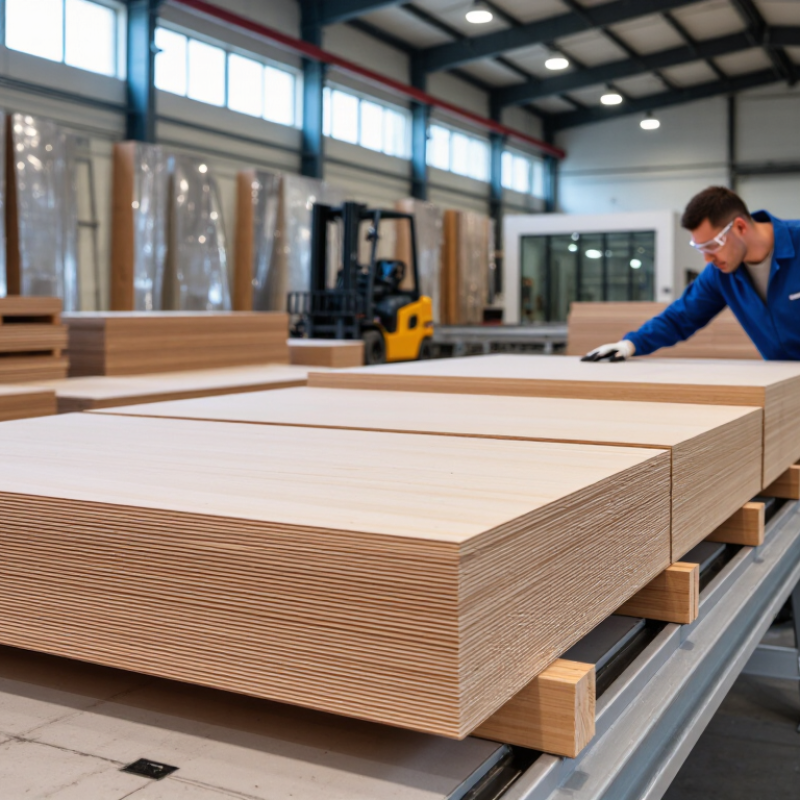
Birch plywood earns global attention through consistent strength, clean surfaces, and dependable machining performance. Its thin birch veneers are layered in alternating directions, creating balanced panels with strong load distribution. That matters.
In cabinet shops, CNC routers cut birch plywood with predictable accuracy. Edges usually remain cleaner than those of many softer plywood types. Manufacturers value its smooth face for furniture, wall panels, doors, and precision packaging. Its light color also accepts paint, stain, and clear finishes with fewer visual surprises. A smooth surface, however, does not guarantee quality. That assumption needs challenging.
For construction, buyers should match the panel grade with the working environment. Interior-grade plywood suits dry rooms, while exterior exposure requires suitable bonding and surface protection. Moisture content, thickness tolerance, veneer repairs, and formaldehyde emissions deserve careful checks. Reliable suppliers provide test reports, grading details, and traceable production information. Packaging matters too. Pallets need strong edge protection and moisture-resistant wrapping during long-distance transport. One overlooked detail is storage after arrival. Panels can arrive in perfect condition, then warp on a damp jobsite. Global buyers also compare supply stability, customization capacity, and delivery records, not only price. Price alone misleads. Even experienced purchasers sometimes underestimate local humidity, machining waste, or replacement delays. A more careful specification can prevent costly surprises.

Commonly traded birch plywood thicknesses range from thin, lightweight panels for interior components and packaging to thicker panels for structural, transport, furniture, and industrial applications. Birch plywood is valued for its high strength-to-weight ratio, stable cross-laminated structure, smooth face quality, and suitability for machining and CNC processing.
The chart presents widely used nominal thickness formats rather than supplier market-share data. Actual availability, tolerances, bonding class, emissions class, and certification should be verified against the applicable purchase specification and standards such as EN 315, EN 636, and EN 13986.
Reliable birch plywood suppliers should prove quality, not merely describe it. The FAO Global Forest Products Facts and Figures 2023 report records approximately 3.88 billion cubic metres of global roundwood production. This scale makes traceability essential, especially when buyers compare mills across regions. Ask for batch-specific records, including log origin, core composition, moisture content, and pressing temperature.
Check compliance with EN 636 for plywood performance and EN 314-2 for bonding quality. For construction applications, EN 13986 documentation can confirm suitability for regulated use. In North American projects, request formal test evidence for ASTM requirements and TSCA Title VI or CARB Phase 2 emissions limits.
A supplier should provide recent laboratory reports, not recycled certificates. Verify report dates, sample numbers, and the tested product thickness. A perfect-looking sheet can still fail.
Tips: Inspect ten random panels from each shipment. Measure thickness at several points. Look for open joints, core gaps, bubbling, and uneven sanding. Request bond testing after water exposure. Ask whether face veneers are natural birch or repaired grade. FSC or PEFC chain-of-custody documents may support responsible sourcing, but they do not replace structural testing.
The UNECE/FAO Forest Products Annual Market Review 2023–2024 notes continued pressure from changing demand and inventory levels. That matters. Suppliers may quietly substitute grades during tight periods. Put species, grade, adhesive class, tolerances, packaging, and rejection procedures into the purchase contract. Some buyers still rely too heavily on samples; that is a weakness worth correcting.
For global buyers in 2026, birch plywood sourcing depends heavily on supplier region. Northern Europe is known for dense birch logs, stable grading, and careful panel pressing. Its producers often serve furniture, cabinetry, and transport interiors. Buyers can expect clear documentation and consistent thickness. Freight still matters, especially for distant markets. That trade-off deserves calculation before volume contracts.
The Baltic region offers a practical balance between raw-material access and export logistics. Short routes to European ports can support regular container planning. Many mills focus on calibrated panels, film-faced surfaces, or cut-to-size orders. Quality can vary between production lines, however. A serious buyer should request recent test reports, glue-emission data, and samples from current batches. Samples reveal more.
China remains strong in high-volume production, flexible specifications, and competitive conversion services. Suppliers may provide custom dimensions, edge machining, and mixed-container loading. This helps distributors serving several industries at once. Yet price alone can hide uneven core repairs or surface quality. I would inspect veneer lay-up, moisture readings, packaging, and loading records. No region wins every project. Port access, certification, payment terms, and after-sales response can change the real cost. Some procurement plans still underestimate inspection time. That is a mistake worth revisiting.
2026 Top Birch Plywood Suppliers for Global Buyers
Comparing birch plywood suppliers requires more than checking the lowest unit price. Request identical specifications, including thickness, dimensions, face grade, core structure, glue class, and moisture limits. A small variation can change the quote significantly. Ask for a recent sample, not only product photos. Inspect the veneer surface, edge bonding, sanding quality, and sheet flatness under normal warehouse lighting.
Certification documents should match the actual factory and product scope. Verify chain-of-custody claims, formaldehyde testing, and applicable technical certificates through recognized issuing bodies. Do not accept unclear scans. Confirm certificate numbers and validity dates. Pricing should include more than the factory offer. Compare packaging, inland transport, insurance, duties, and port charges under the same Incoterm. A cheaper sheet may become expensive after delivery.
Capacity needs practical evidence. Request monthly output, current lead time, kiln-drying methods, and the number of production lines. Ask how the supplier handles repeat orders when demand rises suddenly. Export service also matters. Reliable partners provide clear packing lists, container-loading photos, inspection support, and accurate shipping documents. I have found that written tolerances prevent many disputes. Still, a spreadsheet can mislead when exchange rates or port delays change. My own comparison process is not perfect, so I leave room for inspection costs and schedule risk. Small details often decide the real supplier value.
| Anonymous Supplier Profile | Typical Manufacturing Base | Indicative FOB Price Range (USD/m³) | Typical Export Capacity (m³/month) | Common Birch Plywood Grades | Core Product Specifications | Certification Documents to Request | Quality-Control Strength | Typical Lead Time | Export-Service Capability | Best Fit for Buyers | Key Verification Questions |
|---|---|---|---|---|---|---|---|---|---|---|---|
| Profile A: Integrated Northern European Birch Mill | Finland, Latvia, Estonia, or neighboring Northern European production regions | 900–1,600 | 1,000–5,000 | BB/BB BB/CP CP/CP | 100% birch construction; calibrated thickness; stable panel geometry; commonly available in 6.5–30 mm thicknesses and 1,250 × 2,500 mm formats | FSC Chain of Custody EN 13986 / CE E1 EN 314-2 | ★★★★★ Strong process control and batch traceability | 4–8 weeks for standard items; longer for custom machining | Good container planning, export packing, technical documentation, and European port coverage | Furniture, interior joinery, CNC machining, premium retail fixtures, and visible-surface applications | Confirm veneer grading rules, core-gap limits, formaldehyde test method, and moisture content at loading |
| Profile B: Eastern European High-Volume Manufacturer | Poland, Czechia, Romania, or other Central and Eastern European production regions | 700–1,250 | 1,500–6,000 | BB/BB BB/CP CP/CP | Birch face and core veneers; broad thickness range; standard construction panels and cut-to-size programs available | CE under EN 13986 E1 FSC available EN 314-2 | ★★★★☆ Usually consistent when specifications are contractually defined | 3–7 weeks for regular production | Efficient trucking to European distribution hubs; palletized and containerized shipments; multilingual documentation often available | Construction interiors, furniture components, distributors, and medium-to-large recurring orders | Ask whether certification applies to the exact factory, product thickness, glue line, and delivery batch |
| Profile C: Large Asian Export Manufacturer | China or other major Asian panel-manufacturing regions | 450–900 | 3,000–15,000 | BB/BB BB/CC CP/CP | Birch-faced or mixed-hardwood-core panels; broad customization options; standard sheets commonly offered in 1,220 × 2,440 mm and 1,250 × 2,500 mm formats | CARB Phase 2 TSCA Title VI E1 FSC available | ★★★☆☆ Can be strong, but independent inspection is recommended | 5–10 weeks, including production and ocean scheduling | Strong container consolidation, private-label packaging, fumigation coordination, and global port coverage | Large-volume importers, price-sensitive projects, packaging, commercial fit-out, and standard-size programs | Verify whether the panel is 100% birch or birch-faced with another hardwood core; request production photos and third-party test reports |
| Profile D: Turkish Birch Panel Producer | Turkey and nearby Mediterranean manufacturing corridors | 600–1,100 | 1,000–5,000 | BB/BB BB/CP Film-Faced | Birch plywood for furniture, construction, transport, and industrial uses; cut-to-size and coated surfaces may be available | E1 CE where applicable FSC available EN 314-2 | ★★★★☆ Good balance between customization and regional logistics | 4–8 weeks for standard orders | Competitive access to Mediterranean, European, Middle Eastern, and North African routes; flexible truck and container loading | Regional distributors, furniture factories, contractors, and buyers seeking shorter transit than Asian sourcing | Confirm veneer origin, panel density, edge-sealing requirements, and the exact shipping route and Incoterm |
| Profile E: Certified Specialty Supplier | Any major birch plywood production region with audited specialty production | 1,000–2,000+ | 300–2,000 | Premium BB/BB Aircraft-style CNC-ready | Tight thickness tolerances; selected face veneers; low-defect cores; optional oversized sheets, pre-cutting, CNC machining, or special bonding systems | FSC Chain of Custody E1 or lower-emission class EN 314-2 Project-specific test report | ★★★★★ Detailed inspection records and technical support normally available | 6–12 weeks due to customization and approval samples | Sample approval, technical submittals, inspection coordination, export crating, and project documentation | High-end furniture, interior architecture, marine interiors, demanding CNC work, and specification-led projects | Request tolerance tables, face-grade photographs, bonding test results, and a signed inspection-and-acceptance procedure |
| Profile F: Small Flexible Regional Converter | Local or regional processor purchasing panels from multiple mills | 850–1,800 | 200–1,000 | BB/BB BB/CP Cut-to-size | Standard birch plywood with local cutting, edge treatment, sanding, drilling, CNC routing, or finishing services | Factory certificates from the original mill; product-specific E1 or CARB documentation; FSC status must be checked for each supply chain | ★★★☆☆ Service can be excellent, but upstream traceability varies | 2–6 weeks for stocked panels; 6–10 weeks for replenishment | Small minimum order quantities, local delivery, mixed-SKU pallets, and fast prototyping | Small and medium buyers, prototypes, replacement parts, local projects, and mixed-size orders | Identify the original mill, confirm certificate validity, and determine who is responsible for claims involving delamination or grade disputes |
Importing birch plywood in 2026 requires more than comparing supplier prices. FAOSTAT’s forestry database records global plywood production above 100 million cubic metres annually, showing a highly competitive market. Buyers should request recent mill test reports, thickness tolerances, formaldehyde results, and veneer species declarations. A 12-millimetre panel may still vary in actual thickness, especially after long ocean transport.
Before shipment, agree on packaging, container ventilation, pallet dimensions, and inspection timing. The UNECE/FAO Forest Products Annual Market Review highlights continued exposure to freight costs, trade disruption, and uneven regional demand. Therefore, use landed-cost calculations instead of relying on the factory quotation. Include port charges, insurance, inland delivery, duties, and possible storage fees. UN Comtrade HS 4412 records can help compare import values and volumes across destination markets, but customs classifications are not always perfectly consistent. That deserves checking.
For European shipments, maintain traceability records, supplier declarations, harvest-country information, and geolocation data where required by current due-diligence rules. Other markets may require chemical-emission testing, plant-health documents, or product conformity evidence. Keep one retained sample from every production batch. It feels excessive, until a shipment arrives with swollen edges and unclear responsibility. Independent pre-shipment inspection remains useful, but it cannot replace a reliable supplier audit and a clearly written contract.
We serve the Greater Milwaukee area: Waukesha, Milwaukee, Washington, Ozaukee Counties and nearby areas, including Germantown, Menomonee Falls, Mequon, Cedarburg, Thiensville, Grafton, Jackson, West Bend, Hartland, Waukesha, Brookfield, West Allis, Franklin, Greenfield and more. We are Wisconsin’s Best Contractor for Replacement Windows, Doors, Siding & Roofing!
Address:
N112 W14880 Mequon Road
Germantown, Wisconsin 53022
Phone:
Email:
Monday: 9am – 5pm
Tuesday: 9am – 5pm
Wednesday: 9am – 5pm
Thursday: 9am – 5pm
Friday: 9am – 4:30 pm
Saturday by Appointment
Evenings by Appointment