

Choosing an Operation Theatre Surgical Light is a clinical and purchasing decision, not merely a search for maximum brightness. Surgeons need a stable, shadow-reduced field during long procedures. Nurses need controls that remain intuitive under pressure. Biomedical teams need dependable components, easy cleaning, and practical maintenance access.
This guide reviews seven surgical lights for global buyers. Each option is considered through illumination quality, color rendering, beam adjustment, arm movement, sterilization compatibility, and operating cost. We also examine backup performance, installation requirements, warranty support, and documentation. These details matter when a light must serve different theatres, surgical specialties, and power environments.
Small details often decide the outcome. A handle should feel balanced, not loose. The light head should move smoothly without drifting. Controls should respond through sterile covers. Brightness must remain comfortable during delicate work. Harsh glare can become distracting.
Real-world experience is useful here. Product brochures rarely show how a lamp behaves after repeated cleaning or years of repositioning. Still, no comparison can replace an on-site assessment. Room height, ceiling structure, power quality, and local service capacity may change the final choice. That is an important limitation.
The selected models are not presented as universal winners. One may offer excellent optical performance, while another provides stronger value or easier servicing. Buyers should verify certifications, technical specifications, training, and after-sales terms with qualified suppliers. Reliable evidence matters more than impressive claims. In an operating theatre, consistency matters most.
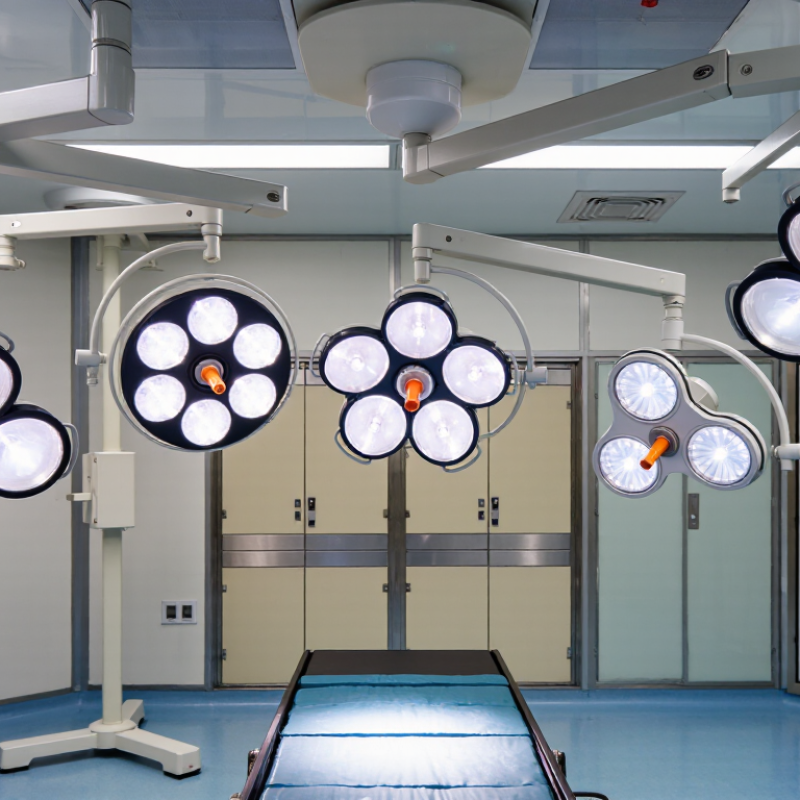
A high-performance operation theatre surgical light must deliver more than intense brightness. It should provide a stable, focused beam across the wound without harsh glare. Many clinical teams look for illumination near 160,000 lux, but the exact requirement depends on procedure type and room design. Adjustable color temperature, usually between 3,500K and 5,000K, helps surgeons distinguish tissue layers more naturally. A high color rendering index matters, especially strong red rendering for blood vessels and subtle tissue changes.
Shadow management is equally important. Multiple LED modules should maintain visibility when a surgeon’s head or hand blocks part of the beam. During practical evaluations, staff should move around the table and observe whether dark areas appear. Sterile handles need smooth movement, secure locking, and easy disinfection. Small design flaws become frustrating during a long procedure.
Heat control also defines performance. A cool beam reduces discomfort for the surgical team and helps protect exposed tissue. Buyers should check air movement, electrical safety, electromagnetic compatibility, and documentation against applicable medical-device standards. Backup power deserves attention too, particularly where interruptions are possible. No specification is perfect. A light may offer excellent brightness yet provide poor balance or awkward controls. Hands-on testing with surgeons, nurses, and maintenance technicians often reveals more than a product sheet. That step is easy to skip. It should not be.

7 Best Operation Theatre Surgical Lights for Global Buyers
Choosing among the seven best surgical lights requires more than comparing brightness. In operating rooms, clinicians need stable illumination, accurate tissue colors, and minimal shadows during long procedures. LED systems usually offer lower heat, adjustable intensity, and several color-temperature settings. High color rendering matters when surgeons assess subtle differences in tissue. Check measured performance, not only catalog claims.
A reliable evaluation begins with the optical system. Review illuminance at the working distance, light-field diameter, shadow dilution, and depth of illumination. A sterile handle should adjust the beam smoothly without disturbing the drape. Test the suspension arm with gloved hands. It should move precisely and remain stable above the table. Ceiling height and room layout also affect usability.
Controls deserve equal attention. Look for sealed panels, clear indicators, and smooth dimming without sudden changes. Battery backup can protect a procedure during brief power interruptions, but its runtime needs verification. Confirm electrical safety, electromagnetic compatibility, cleaning resistance, and applicable medical-device standards in the target market. Supplier training, service response, and spare-part access reveal real reliability. A showroom test can mislead. Observe the light during a simulated procedure, then reassess it after repeated repositioning and cleaning.
Peak central illuminance is a useful first comparison, but buyers should also assess shadow dilution, color rendering, adjustable color temperature, LED service life, sterile controls, heat management, and compliance with applicable medical-device standards.
Reference values represent common specification levels for modern LED surgical-light configurations. Typical high-performance systems deliver approximately 100,000–160,000 lux at the central field, CRI values above 90, color temperatures around 3,500–5,000 K, and LED lifetimes commonly rated at 50,000–60,000 hours.
7 Best Operation Theatre Surgical Lights for Global Buyers
Seven Leading Operation Theatre Surgical Lights for Global Buyers
Global buyers should compare seven practical surgical-light configurations: single-head ceiling lights, dual-head systems, mobile LED lights, compact minor-procedure lights, battery-supported units, camera-ready lights, and hybrid imaging-compatible systems. Each option serves a different room size, surgical depth, and infrastructure level. A dual-head system can reduce shadowing during abdominal procedures. A mobile unit can support smaller hospitals or temporary theatres. However, mobility may mean less stability during repositioning.
The World Health Organization’s Global Surgery 2030 report estimates that five billion people lack access to safe, affordable surgical care. It also identifies a need for 143 million additional procedures annually. These figures make reliability more important than decorative features. Buyers should check illumination control, color rendering, heat management, sterile-handle design, and backup power. IEC 60601-2-41 compliance should be verified through valid technical documentation. Ask for test records, not attractive claims.
In practice, surgeons notice small details. A deep cavity should remain visible when hands and instruments move beneath the lamp. A matte handle should resist slipping inside sterile gloves. Automatic intensity changes can help, but sensors sometimes react poorly to drapes. That weakness deserves attention. Procurement teams should test lights in a simulated procedure, measure shadows, and review maintenance access. Market forecasts often emphasize rapid LED growth, yet local training and spare-part availability may matter more than projected sales figures. WHO guidance and independent clinical feedback should support the final decision.
| No. | Surgical Light Configuration | Recommended Use | Maximum Illuminance | Color Rendering Index | Color Temperature | Light Field Diameter | Rated Input Power | Key Evaluation Point |
|---|---|---|---|---|---|---|---|---|
| 1 | Dual-Head Premium LED Operating Light | Major operating rooms and complex procedures | 160,000 lux at 1 m | Ra ≥ 95; R9 ≥ 90 | 3,500–5,000 K, adjustable | 180–300 mm | 120–180 W per head | High illuminance, adjustable color temperature, multi-layer shadow compensation, and independent sterile controls. |
| 2 | Large-Aperture Modular LED Light | General surgery and long-duration operations | 150,000 lux at 1 m | Ra ≥ 95; R9 ≥ 90 | 3,800–5,000 K, adjustable | 180–320 mm | 100–160 W per head | Large field size and low-shadow performance support consistent illumination across deep and wide surgical sites. |
| 3 | Three-Head Integrated LED System | Teaching hospitals and hybrid operating theatres | 140,000 lux per head at 1 m | Ra ≥ 95; R9 ≥ 90 | 3,500–5,000 K, adjustable | 160–300 mm | 90–150 W per head | Three independently positioned light heads provide flexible coverage for multiple clinicians and procedures. |
| 4 | Camera-Ready LED Surgical Light | Video-assisted surgery and medical education | 130,000 lux at 1 m | Ra ≥ 95; R9 ≥ 90 | 3,800–5,000 K, adjustable | 170–300 mm | 100–150 W | Uniform illumination and reduced flicker are suitable for integrated surgical cameras and displays. |
| 5 | Compact Single-Head LED Operating Light | Outpatient surgery, day surgery, and smaller theatres | 120,000 lux at 1 m | Ra ≥ 95; R9 ≥ 85 | 3,800–4,800 K, adjustable | 150–280 mm | 70–120 W | A space-efficient configuration with lower ceiling-load requirements and practical energy consumption. |
| 6 | Mobile LED Surgical Light | Flexible rooms, emergency areas, and backup use | 100,000 lux at 1 m | Ra ≥ 95; R9 ≥ 85 | 3,800–5,000 K, adjustable | 140–260 mm | 60–100 W | Lockable casters, battery backup, and height adjustment allow use without permanent ceiling installation. |
| 7 | Value-Oriented Dual-Head LED Light | General hospitals and budget-conscious projects | 100,000–120,000 lux at 1 m | Ra ≥ 90; R9 ≥ 80 | 4,000–5,000 K | 150–280 mm | 80–140 W per head | Provides two-head coverage, LED efficiency, and essential shadow-reduction functions for routine procedures. |
| Specifications are representative performance ranges for current LED operating-light configurations. Actual values vary by configuration, mounting height, field size, control mode, and regional electrical requirements. Buyers should verify IEC 60601-2-41 compliance, photobiological safety, installation conditions, warranty coverage, and local certification before purchase. | ||||||||
Choosing the seven best operating theatre surgical lights requires more than comparing brightness. IEC 60601-2-41 specifies central illuminance from 40,000 to 160,000 lux for surgical luminaires. However, higher output is not automatically better. Excessive glare can tire surgeons, especially during long procedures. Look for adjustable intensity, stable colour temperature, and deep-cavity visibility. The right beam should reveal tissue detail without creating harsh shadows.
Ergonomics deserves equal attention. A ceiling-mounted light should move smoothly with one hand and remain steady after positioning. Handles need sterilizable covers and enough clearance for gloved use.
A 2023 healthcare lighting review by the U.S. Department of Energy reports that LED systems can reduce lighting energy use by up to 75% compared with older technologies. That matters when lights operate for many hours each day. Still, energy savings can be overstated if control systems, maintenance, and installation are ignored.
Safety is quieter but more decisive. Check heat near the surgical field, electrical protection, backup performance, and cleaning resistance. IEC testing provides a useful baseline, not a complete purchasing decision.
During a real evaluation, observe whether the light drifts after ten minutes. Small movement matters. No scorecard is perfect. One model may offer excellent illumination but awkward handles, while another saves energy yet provides weak shadow control. Compare measured performance, staff feedback, service intervals, and total operating cost before selecting the final seven.
For global buyers, the seven best operation theatre surgical lights should be judged by use, compliance, and service access. Options include single-head, double-head, ceiling-mounted, wall-mounted, mobile, shadow-reduction, and camera-ready systems. Each design suits different theatre sizes and surgical routines. Request electrical safety, EMC, photobiological safety, and performance reports before purchasing. Standards differ by market, so local regulatory verification remains essential. Never rely only on a supplier’s sales brochure.
Installation requires more than lifting the light into position. Measure the ceiling. Confirm structural load capacity, fixing points, sterile-zone clearance, and emergency power compatibility. In a busy theatre, the arm should move smoothly without drifting. Test illumination at the table, not just in an empty room. Check colour rendering, adjustable colour temperature, shadow control, and handle sterilisation procedures. A camera port can help training, but it may increase cleaning and cable-management demands.
Maintenance planning should begin before delivery. Keep replacement handles, fuses, control modules, and power supplies available locally when possible. Record cleaning, movement resistance, illumination checks, and electrical inspections. LED life ratings are useful, but they do not guarantee trouble-free operation. Sensors can fail. Touch controls may respond poorly after repeated disinfection. Expect small failures. Train biomedical staff to identify unsafe heat, flicker, unusual noise, or arm instability. Installation records, user training, and responsive technical support often matter more than a lower purchase price. One practical weakness remains: many buyers compare brightness but overlook service time. That decision can disrupt an operating schedule later.
We serve the Greater Milwaukee area: Waukesha, Milwaukee, Washington, Ozaukee Counties and nearby areas, including Germantown, Menomonee Falls, Mequon, Cedarburg, Thiensville, Grafton, Jackson, West Bend, Hartland, Waukesha, Brookfield, West Allis, Franklin, Greenfield and more. We are Wisconsin’s Best Contractor for Replacement Windows, Doors, Siding & Roofing!
Address:
N112 W14880 Mequon Road
Germantown, Wisconsin 53022
Phone:
Email:
Monday: 9am – 5pm
Tuesday: 9am – 5pm
Wednesday: 9am – 5pm
Thursday: 9am – 5pm
Friday: 9am – 4:30 pm
Saturday by Appointment
Evenings by Appointment