
Blog

10 Best Garden Canopy Options for Buyers

A Garden Canopy can turn a hot patio into a usable outdoor room, but the right choice depends on more than appearance. Buyers should compare shade coverage, frame stability, fabric quality, setup time, and storage needs. A compact pop-up canopy may suit weekend gatherings, while a fixed pergola-style structure can better define a daily dining area. The difference shows up in small details: a loose corner in gusty weather, a fabric panel that fades, or a frame that will not fit in the shed.

Industry research offers useful context, though it cannot choose a canopy for every garden. The American Society of Landscape Architects’ 2024 Residential Landscape Architecture Trends Survey tracks outdoor-living design priorities among landscape professionals. For practical sun planning, the U.S. Environmental Protection Agency’s UV Index guidance explains why shade helps but does not remove all ultraviolet exposure. Reflected light still matters. These sources support a careful buying approach: match the canopy to local conditions, then check its manufacturer’s care and anchoring instructions.

The options ahead range from portable shelters to more permanent designs. Compare them by real use, not glossy product photos. Measure the patio first. Consider wind, rain, and winter storage before ordering. A canopy can improve comfort, but it is not a substitute for weather awareness or sound installation. Some products also look sturdier online than they feel in person. That is worth questioning.
10 Best Garden Canopy Options for Buyers

What a Garden Canopy Is and How It Provides Outdoor Shade

A garden canopy is a roof-like cover supported by posts or a frame, creating a shaded area for seating, dining, or gardening. It may use fixed panels or a retractable fabric top. Unlike a tree, a canopy offers shade where you place it, though its footprint and height affect how much sun it blocks. A low canopy can feel cool at noon but leave chairs exposed as the sun moves.

Shade helps reduce direct sunlight and heat on people and outdoor surfaces. It does not eliminate ultraviolet exposure: UV rays can scatter through open sides or reflect from pale paving and water. The WHO, WMO, UNEP, and ICNIRP’s Global Solar UV Index: A Practical Guide recommends sun protection when the UV Index reaches 3 or higher. A canopy is useful, but it is not complete protection. On bright days, check the local UV Index and consider adding side screens or moving seating farther under the roof.

Tips: Measure the seating area before choosing a canopy, then allow extra coverage for angled sunlight. Check the frame and fabric after windy weather; small shifts can expose the table sooner than expected. Ventilation matters, too. A tightly enclosed canopy may trap warm air, so leave openings where practical.

Key Features That Distinguish the Main Garden Canopy Types

Garden canopy types differ most in frame, anchoring, and shade coverage. Pop-up models fold quickly and suit temporary use, but light frames can shift in gusts. Cantilever canopies keep a central pole out of the seating area; their offset design needs a stable, weighted base. Pergolas offer a permanent-looking structure, though open slats provide less rain protection. Shade sails are airy and compact, but their tension points must be securely fixed.

Fabric matters, too. Dense, UV-resistant material can create more dependable shade than a loosely woven cover, while a vented roof may feel cooler in still weather. The World Health Organization’s Global Solar UV Index guide advises sun protection at UVI 3 or higher. A canopy reduces direct exposure, but reflected UV and changing sun angles remain. That distinction matters. The U.S. Department of Energy reports that window awnings can cut solar heat gain by up to 65% on south-facing windows and 77% on west-facing windows; those figures apply to windows, not open garden seating.

Choose by the job, not appearance alone. For a small patio, measure the canopy’s shadow at midday and late afternoon before buying. Check the maker’s stated wind limits and anchoring instructions; never assume a heavy-looking frame is storm-proof. Retractable covers are flexible, but they need more moving-part care. Permanent structures last longer in place, yet their fixed shade can darken nearby rooms. I would still test the planned footprint with temporary shade first. A tape measure can prevent an expensive mismatch.

10 Best Garden Canopy Options for Buyers

A practical comparison of common canopy types by portability. Scores are qualitative (1 = least portable, 5 = most portable), based on typical construction and installation; specific models vary.

Freestanding, lightweight designs such as pop-up canopies and patio umbrellas are generally easier to move. Permanent structures such as pergolas and gazebos are typically intended to remain in place.

Comparing 10 Garden Canopy Options by Design and Use

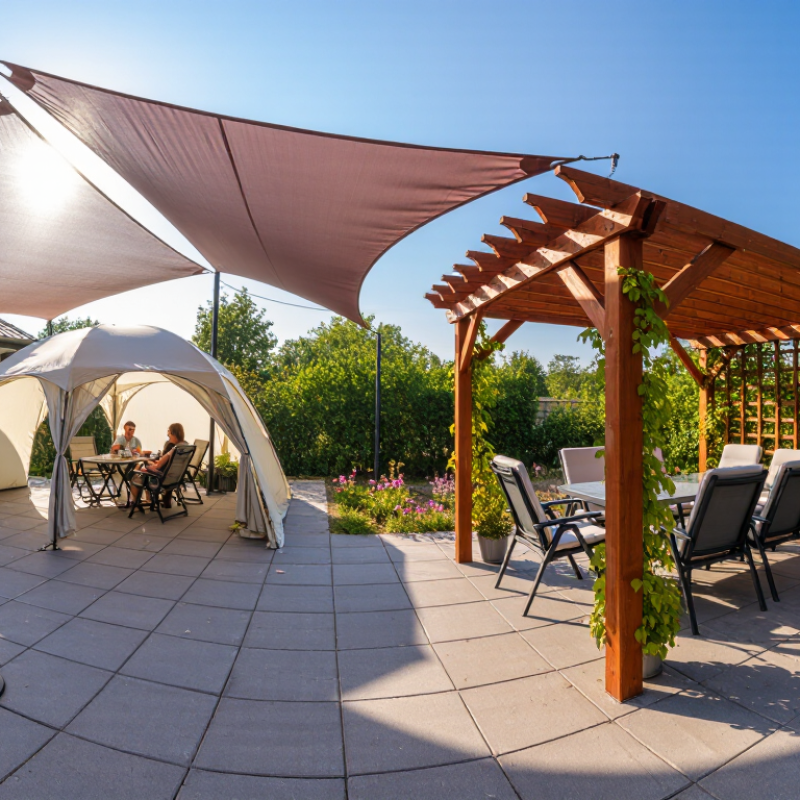
Garden canopies vary more in setup and coverage than their names suggest. A pop-up canopy suits short gatherings and folds away quickly, but its light frame can feel unstable in gusts. A steel-frame gazebo offers steadier shelter for patio dining. Its heavier parts take longer to move. A wooden pergola brings a permanent, open-beam look, though climbing plants rarely provide instant shade. That trade-off is real.

A retractable canopy lets you adjust shade across a deck, while a shade sail creates a clean, airy shape above a seating area. Both need careful placement; low afternoon sun can still slip underneath. A marquee covers a large lawn for parties, but may feel oversized for everyday use. A lean-to canopy uses a wall for support and suits narrow patios. Check the wall and fixings before installation. A dome canopy has a softer profile and works well as a small garden retreat.

For family meals, a screened gazebo can help keep flying insects away, though mesh reduces airflow on still days. A cantilever canopy leaves the space beneath its offset pole open, useful beside loungers or a table. I still find this choice harder than it looks. Measure the footprint, note the sun’s direction, and consider who will assemble it. A canopy that looks perfect in a product photo may leave a real garden awkward to use.

How to Choose a Canopy for Your Space, Climate, and Budget

Start with the space, not the product photo. Measure the area you want shaded, then leave room for chairs, walkways, and doors to open fully. A canopy that fits on paper may crowd a narrow patio in real life. Check the ground, too: soft soil, paving, and decking need different anchoring methods. Measure twice.

Your climate should guide the frame and fabric. In windy areas, look for clear wind guidance from the maker and use the recommended anchors; take a portable canopy down before strong gusts. For frequent rain, check whether the roof sheds water and avoid letting puddles collect. UV-resistant fabric can help limit fading, but shade moves during the day. Shade shifts. Notice where the sun falls at the hours you plan to sit outside.

Set a budget that includes more than the canopy itself. Compare frame strength, replacement-cover availability, storage needs, and routine upkeep. A lighter, less expensive option can suit occasional use, while a sturdier design may make sense for regular gatherings. Still, paying more does not guarantee a better fit. Think about who will set it up, how often it will be used, and whether it must be packed away each season. Your first choice may not be perfect; a quick sketch of the space can reveal problems before you buy.

10 Best Garden Canopy Options for Buyers - How to Choose a Canopy for Your Space, Climate, and Budget

Option Typical Coverage Best For Climate Suitability Typical Price (USD) Key Advantage What to Consider
Pop-Up Canopy About 100 sq. ft. (10 × 10 ft.) Temporary shade for gatherings, gardening tasks, or markets Best in mild, dry weather; secure carefully and take down in strong wind $80–$400 Quick to set up and easy to store Not intended as a permanent structure; fabric and frame durability vary
Soft-Top Gazebo About 100–144 sq. ft. Seasonal dining or lounge areas Suitable for fair-weather use; remove or protect the canopy during storms and heavy snow $150–$900 More spacious and decorative than a basic pop-up canopy Check whether replacement fabric is available and whether anchoring hardware is included
Hardtop Gazebo About 100–200 sq. ft. A more permanent patio or garden shelter Often more weather-resistant than fabric roofs, but suitability for snow and wind depends on the rated design $800–$5,000+ Durable roof and year-round structure options Requires a level, prepared site; check local permits and the product’s wind and snow ratings
Retractable Pergola Canopy Commonly 100–200 sq. ft., depending on the pergola Patios where adjustable sun and shade are useful Works well in sunny, moderate climates; retract the fabric in strong wind or severe weather $500–$4,000+ for canopy components; structure may cost extra Lets users adjust shade as the sun moves Confirm compatibility with the frame and plan for cleaning and fabric replacement
Shade Sail Often 100–400 sq. ft., depending on shape and size Modern, open-air shade over seating or play areas Useful in sunny climates; porous fabric can allow airflow, while storms require removal or secure installation $30–$300, excluding substantial support posts or installation Flexible shapes and relatively low material cost Needs strong anchor points and careful tensioning; shade coverage changes with the sun
Cantilever Umbrella Typically 50–100 sq. ft. Seating areas where a center pole would get in the way Good for warm, calm conditions; close and secure it when wind picks up $150–$1,000+ Offset pole leaves the area beneath the canopy unobstructed Requires a heavy, stable base; check the canopy’s rotation and tilt range
Market Umbrella Typically 30–70 sq. ft. Small patios, café tables, and compact gardens Best in mild weather; close it during gusty conditions and store it when not in use $30–$300, with the base often sold separately Compact, widely available, and easy to position Coverage is limited; match the base weight to the umbrella and use location
Screened Gazebo About 100–150 sq. ft. Outdoor dining in areas with mosquitoes or other insects Useful in warm seasons; mesh improves insect protection but does not make the space climate-controlled $200–$1,500 Combines overhead shade with screened sides Screens can tear; inspect closures, seams, and anchoring before purchase
Retractable Patio Awning Commonly 60–200 sq. ft. Shade directly beside a house or other suitable wall Helpful in sunny climates; retract during high winds and follow the installation specifications $500–$3,000+; professional installation may add cost Provides adjustable shade without taking up ground space Requires a suitable wall and secure mounting; check fabric, projection, and wind limits
Wall-Mounted Fixed Awning Commonly 40–150 sq. ft. Consistent shade over a doorway, window, or narrow patio Choose materials suited to local sun and rainfall; verify the structure is rated for expected weather loads $200–$2,000+, depending on size and installation Does not need to be opened and closed for daily use Less flexible than a retractable option; mounting must suit the wall construction

Note: Coverage and prices are approximate planning ranges in U.S. dollars. Actual costs vary by size, materials, local labor, and installation. Always check product specifications, anchoring requirements, local permits, and wind or snow ratings for your site.

Installation, Care, and Safe Use of a Garden Canopy

A garden canopy stands more securely on level ground, with each leg locked and every anchor fitted before the fabric goes up. Check the frame joints for bent pins, cracked welds, or loose bolts. Then pull the canopy gently from opposite corners; visible rocking means the setup needs attention. On soil, use stakes suited to the ground. On paving, choose ballast designed for the canopy, not loose bricks that can shift. A small detail. Often missed.

Check the forecast before opening the canopy. NOAA’s Storm Prediction Center classifies thunderstorm winds of 58 mph or more as severe; that is a storm warning threshold, not a safe operating limit for a canopy. Lower gusts can still lift fabric or strain a frame, so follow the manufacturer’s wind limit and close or dismantle the canopy when conditions worsen. Never leave it unattended during changing weather. I have seen people trust a calm morning too much.

After use, let the fabric dry fully before storage to reduce mildew. Brush away leaves, rinse dirt with mild soapy water, and inspect seams and anchor points regularly. Don’t climb on the frame or hang lights and planters unless the structure is rated for that load. Keep flames and hot equipment away from canopy fabric. Safety can feel fussy, but replacing a torn panel is fussier.

Go to Top