

Blog

What Is the Best Powder Coated MDF Furniture for 2026?

Choosing the best Powder Coated MDF furniture for 2026 means looking beyond color and price. The right piece should suit its room, daily use, and care routine. A smooth, even finish matters. So do stable panels, clean edges, and well-fitted hardware. Small flaws can show quickly on a glossy cabinet door.

Powder coating on MDF depends on specialized preparation and processing, so product details deserve a close look. Ask what the finish is designed to withstand, and check the maker’s cleaning and maintenance guidance. For a busy kitchen, moisture exposure and frequent handling matter. For a bedroom or home office, appearance, storage, and easy assembly may carry more weight. There is no single best choice for every home.

This guide compares practical features, including finish quality, construction, design, and value. It also explains what to inspect before buying, from door alignment to the feel of exposed edges. A polished product photo is useful, but not enough. Read specifications and reviews together. Some details remain hard to judge online. That is worth remembering. A careful comparison can help you choose furniture that looks good now and remains suitable for everyday use.
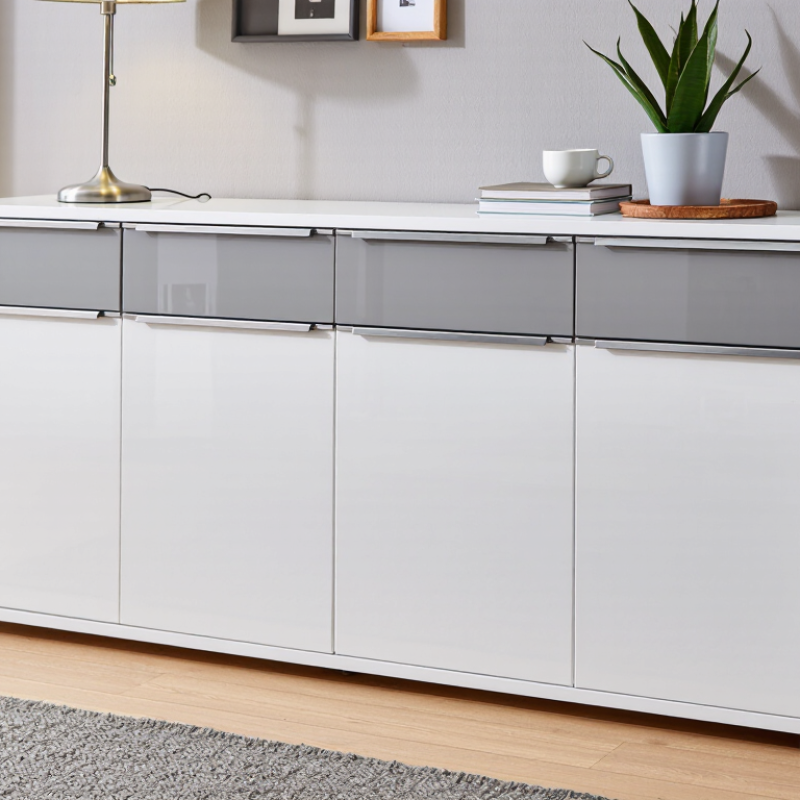
What Is the Best Powder Coated MDF Furniture for 2026?

What Powder-Coated MDF Furniture Is and How It Is Made

Powder-coated MDF furniture combines a smooth, engineered wood panel with a dry-powder finish. MDF is made by blending fine wood fibers with resin, then pressing them into dense, uniform boards. Unlike metal, MDF does not naturally conduct electricity, so ordinary electrostatic powder coating will not adhere reliably on its own. Manufacturers may apply a conductive primer or use a coating process developed for non-metal surfaces. The powder is sprayed onto prepared panels, then heated until it melts and forms a continuous film.

Small details matter. Edges and drilled holes can absorb moisture or show uneven coverage if preparation is rushed.

The exact production line varies, but panels are typically sanded, cleaned, coated, and cured under controlled heat. Excessive heat can damage the board or affect its surface, so curing conditions need careful adjustment. The US EPA’s TSCA Title VI sets an MDF formaldehyde emission limit of 0.11 parts per million; buyers can check product documentation for emissions information.

Grand View Research estimated the global powder coatings market at US$13.49 billion in 2022, but that figure covers many applications, not MDF furniture alone. It signals a broad industrial coating sector, not proof that every powder-coated panel performs equally well. Ask how edges are finished, and look closely at corners for thin spots.

The finish can be durable, but it is not indestructible.

Which Furniture Types Suit Powder-Coated MDF Best

Powder-coated MDF works especially well on furniture with broad, flat panels. The finish can create a smooth, consistent surface in colors that suit calm or vivid interiors. This makes cabinet doors, sideboards, wardrobes, bedside tables, and desk fronts strong candidates. Edges matter most. On a well-made piece, sealed edges help protect the core from everyday bumps and small spills.

Kitchen and bathroom cabinetry can also suit this finish, provided the room has good ventilation and the panels are properly sealed. Powder coating does not make MDF waterproof. Persistent moisture may cause swelling, especially around joints, drilled holes, or damaged edges. For a desk or dining-room sideboard, the coating can handle regular wiping, though sharp impacts may still chip it.

The manufacturing process deserves a closer look. MDF needs suitable preparation and a coating method designed for the panel; it is not automatically compatible with every standard powder-coating line. Ask how the surface was prepared, how the edges were treated, and whether the coating was cured under controlled conditions. A flawless sample can be persuasive, but real furniture has corners, hardware openings, and seams. These details are easy to overlook.

What Is the Best Powder-Coated MDF Furniture for 2026?

Which furniture types suit powder-coated MDF best?

Cabinet fronts and wardrobe panels are strong choices for dry indoor spaces, where a smooth, durable finish is useful. Desks and shelving can also work well when appropriately supported and used within their load limits. Bathroom furniture is less suitable because moisture can damage MDF, particularly at edges and joints. Scores are indicative qualitative ratings, not laboratory test results; suitability depends on the MDF grade, coating process, construction, and environment.

How to Compare Finish Quality, Durability, and Safety

What Is the Best Powder Coated MDF Furniture for 2026?
How to Compare Finish Quality, Durability, and Safety

A convincing finish should look even under daylight, not just showroom lighting. Check broad panels for cloudy patches, pinholes, and color changes near the edges. Run a fingertip along corners and cutouts; roughness there can signal rushed preparation. Small details matter.

Durability depends on more than a tough-looking surface. Ask how the coating is cured and whether the manufacturer tests adhesion, scratching, and impact resistance. If possible, inspect a sample after repeated wiping with a damp cloth. Look closely at corners, where chips often begin. A glossy sample can flatter flaws, so compare it beside a matte one in your room’s lighting. I’d be cautious about judging from photos alone.

Safety also involves the MDF core, not just its powder-coated face. Request current test documentation for emissions and confirm that exposed edges are sealed. Check care instructions, too: standing water can damage vulnerable joints even when the visible surface resists stains. Documentation may feel less exciting than choosing a color, but it makes comparisons more reliable. I still find product descriptions vague sometimes. That is worth questioning.

What Is the Best Powder Coated MDF Furniture for 2026? - How to Compare Finish Quality, Durability, and Safety

The best choice depends on where the furniture will be used and how its edges, joints, finish, and composite-wood emissions are controlled. The comparisons below are construction-based guidance, not laboratory test results for specific products.

Furniture type Finish quality to look for Durability considerations Moisture suitability Safety and documentation Best fit
Home-office desk Look for an even color and sheen, consistent coverage around exposed edges, and no visible pinholes, blisters, or bare spots. A powder-coated surface can resist everyday wear, but sharp impacts and exposed corners may chip the coating. Check whether the maker provides coating adhesion or abrasion test results. Suitable for normal indoor conditions. Wipe spills promptly; unsealed edges and damaged coating can allow MDF to absorb moisture and swell. Ask for documentation identifying the MDF as compliant with applicable formaldehyde-emission rules, such as TSCA Title VI in the United States. A strong general-purpose option for a dry office when the work surface has well-finished edges and a stable support structure.
Living-room or bedroom storage cabinet Check doors and side panels in natural light for uniform appearance. Inspect corners, hinge cutouts, and shelf-pin holes for complete, undamaged finishing. Performance depends on panel thickness, joinery, hardware, and how frequently doors are used—not just the coating. Repeated impacts can damage edges. Best in dry indoor rooms. Avoid prolonged dampness and standing water, particularly near the cabinet base. Request composite-wood emissions documentation and care instructions. A powder-coated finish alone does not establish formaldehyde compliance. A practical choice for everyday indoor storage where a smooth, easy-to-wipe surface is preferred.
Bookcase or display shelving Inspect shelf edges and the underside, where incomplete coverage can be easier to miss. A smooth, consistent finish should have no rough, exposed MDF areas. Shelf sagging is mainly a structural issue affected by span, panel thickness, load, and support—not a finish-quality measure. Follow the stated load limits. Use in dry rooms; keep away from persistent condensation or wet floors. Check the product’s emissions documentation and secure tall units against tipping where appropriate, especially in homes with children. Useful for books and display items when the shelf design is properly supported and the unit is installed as directed.
Bathroom vanity or utility-room cabinet Prioritize complete edge and cutout coverage, especially around plumbing openings, sink cutouts, and the bottom edge. Even a durable coating cannot make ordinary MDF waterproof. Leaks or repeated wetting can cause swelling and damage beneath the surface. Higher risk. Choose only a product explicitly specified for the intended damp-area use, and protect cut edges and plumbing openings from water. Review installation and ventilation instructions, and confirm the substrate and finish are intended for the stated environment. Only when the manufacturer specifically approves the construction for bathroom conditions and water exposure is carefully managed.
Children’s desk or storage unit Check for a continuous, intact finish with no peeling, sharp damaged corners, or accessible unfinished panel edges. Look for sturdy construction, stable hardware, and clear maintenance guidance. Coating durability does not replace tip-over prevention or age-appropriate design. Use indoors and keep dry. Repair or discontinue use if the panel becomes swollen or the coating is badly damaged. Ask for current emissions-compliance documents for the MDF and relevant product-safety information. Do not assume “powder coated” means the entire product is certified safe. A good option when emissions, stability, edge condition, and age-appropriate safety features are all documented.

How to compare claims: Request the substrate specification and applicable emissions documentation. For finish-performance claims, ask for the test method and results; examples of recognized coating tests include ASTM D3359 for adhesion, ASTM D4060 for abrasion, and ASTM D3363 for pencil hardness. Results depend on the test setup and should not be treated as a guarantee of service life. Powder coating requires a suitable MDF and controlled application and curing; it does not make MDF waterproof or automatically establish product-safety compliance.

What to Look for in the Best Powder-Coated MDF Furniture for 2026

Choosing powder-coated MDF furniture in 2026 starts with the panel itself. Ask whether its grade and thickness suit the intended room and use. Powder coating requires careful preparation and controlled curing, so ask how the finish is applied to MDF. That answer matters. Under side lighting, look for an even surface without pinholes, rough corners, or thin patches around cutouts. Edges deserve attention. Well-finished edges help limit moisture entry near sinks, windows, and frequently mopped floors.

Check stability and fit, too. A sturdy cabinet should sit level, resist gentle side-to-side movement, and have doors that meet without scraping. Inspect hinges, drawer runners, and screw connections; weak hardware can reduce a furniture piece’s useful life even when its coating looks pristine. For a desk, check that the top does not flex under ordinary work gear. For shelving, ask about load guidance rather than guessing from panel thickness alone. Water-resistant does not mean waterproof.

Choose a finish that suits daily use. Matte surfaces can reduce glare, while smoother finishes are often easier to wipe, though fingerprints may show. Ask about cleaning instructions and repair options before buying. Small chips happen. A visible edge sample can reveal more than a polished product photo. I would not assume every powder-coated MDF item will age equally; substrate quality, edge sealing, and assembly all make a difference.

How to Choose and Care for Powder-Coated MDF Furniture

Choosing powder-coated MDF furniture starts with its intended setting. For a desk or cabinet near a window, check the panel thickness, edge sealing, and hardware stability. Ask whether the coating covers exposed edges, not only broad surfaces. A smooth finish should feel even, without rough patches or visible chips. Small details matter.

Compare the furniture’s dimensions with your room and leave space for doors or drawers to open fully. Look for clear care instructions and a stated weight limit. MDF can be sturdy, but standing water and repeated dampness may swell unsealed edges. I would be cautious about placing it beside a sink or radiator, even if the surface looks durable. The coating helps resist everyday scuffs; it does not make every joint waterproof.

For routine care, wipe dust with a soft, slightly damp cloth, then dry the surface. Use mild soap for sticky marks, and avoid abrasive pads or strong solvents that may dull the finish. Clean spills promptly. Check screws and hinges every few months, especially on frequently used furniture. A loose hinge is easy to overlook, and tightening it early can prevent the door from scraping the coated panel.

Go to Top