
For wholesale buyers, a Raffia Straw Hat is more than a summer accessory. It is a product shaped by material, construction, fit, and finish. A well-made sample should feel light, sit comfortably, and keep its brim even after careful handling. The weave matters. Look closely for loose ends, uneven gaps, and rough edges around the crown. Small flaws can become costly when multiplied across a large order.
Raffia sourcing specialist Elena Marlowe puts the buying test simply: “A hat earns trust when its weave, shape, and finish stay consistent from sample to shipment.” Use that standard when comparing the ten styles in this guide. Check crown depth, brim width, sizing options, color consistency, packaging, and the supplier’s ability to repeat an approved sample. Ask how natural variations are handled, too. Raffia is a natural fiber, so every piece will not look identical. That is part of its appeal—and a point buyers should discuss before ordering.
The right style depends on the customer and sales channel. A broad brim may suit resort retailers, while a compact shape can work better for travel displays. There is no perfect list. Even a strong-looking sample can disappoint in bulk. Take notes, request clear specifications, and inspect a production sample when possible. Details matter.
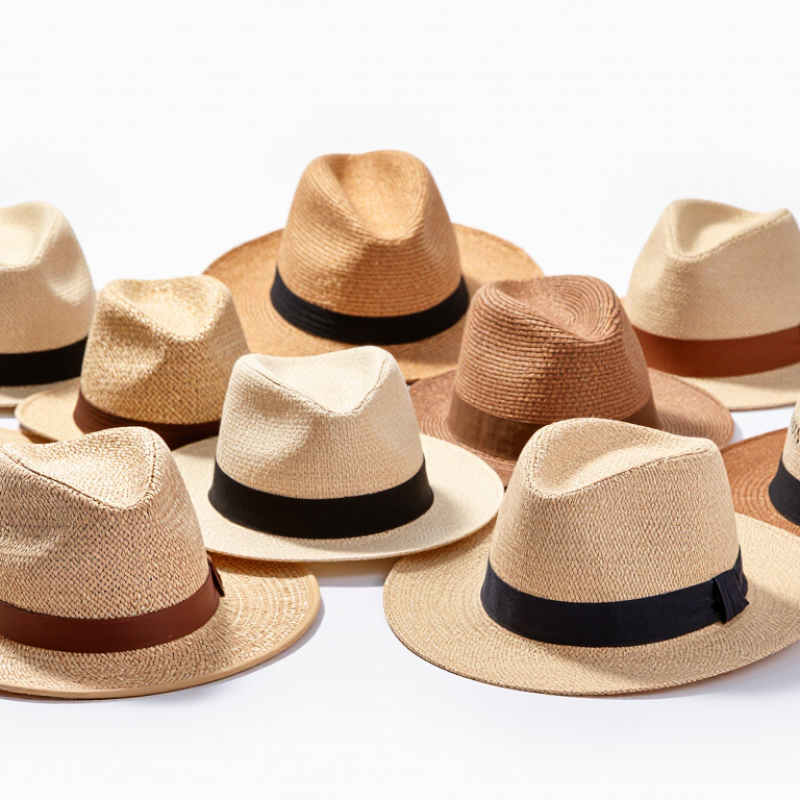
Raffia straw hats are made from long, flexible fibers taken from the leaves of raffia palms. The fibers are dried, sorted by thickness, and split into strands for weaving. Artisans may weave flat panels first, then shape them over a crown mold and finish the brim by hand. Small differences in strand width can change the hat’s texture and stiffness. The process is tactile. In FAO’s Global Forest Resources Assessment 2020, forests cover about 31% of global land area; this broad figure does not measure raffia supply specifically, but it underscores why buyers should ask where plant materials come from.
For wholesale evaluation, inspect the weave in daylight: look for consistent spacing, secure edges, and a crown that holds its shape without feeling rigid. Ask suppliers how fibers are dried and stored, since excess moisture can affect quality during shipment. Request samples from more than one production batch. Still, a few uneven strands are not automatically defects; handwoven work naturally varies, and overly strict uniformity can hide how the hat is made. The better question is whether variation affects comfort, durability, or fit.

When evaluating raffia straw hats for wholesale, begin with the weave, not the product photo. Check a physical sample for loose strands, uneven tension, rough edges, and gaps near the crown. Small variations are normal with natural fibers, but repeated weak spots may signal inconsistent production. Feel the brim, too; it should hold its shape without feeling brittle.
Fit and finishing matter. Measure crown depth, inner circumference, and brim width, then compare several hats from the same batch. Ask how measurements are taken, since a difference of even one centimeter can affect customer fit. Check stitching, sweatbands, and any trim for secure attachment. A neat sample is useful, but it proves little unless the bulk order matches it.
Request written specifications for fiber content, color, dimensions, packing method, and acceptable variation. Ask for a pre-shipment inspection or clear photos of randomly selected units. Natural raffia can vary in shade, especially between batches. That part can be hard to control. Confirm reorder timelines and how defects are handled before committing to large quantities. I would also test a hat after light handling and packing; sometimes a brim that looks perfect on a table arrives creased. The evaluation is not foolproof, so keep your criteria specific and realistic.
| Hat style | Typical construction | Indicative brim | Crown / fit | Wholesale use | What buyers should evaluate |
|---|---|---|---|---|---|
| Classic wide-brim sun hat | Handwoven or machine-woven raffia; flexible brim | About 9–12 cm | Open crown; often adjustable with an inner tie or band | Resorts, beach shops, summer retail | Check brim symmetry, weave consistency, edge finishing, and whether the brim holds its shape after handling. |
| Fedora-style raffia hat | Structured crown with a pinched front and shaped brim | About 5–7 cm | Pinched crown; commonly offered in several head sizes | Fashion boutiques, travel and resort collections | Assess crown definition, dimensional consistency, sweatband comfort, and recovery after shipping. |
| Packable roll-up hat | Soft, pliable raffia weave designed to bend or roll gently | About 8–11 cm | Soft crown; fit may be adjusted with an inner drawstring | Travel retail, online shops, vacation accessories | Request a roll-and-release test; inspect for broken strands, permanent creases, and loss of brim shape. |
| Cloche hat | Close-fitting rounded crown with a short, downward brim | About 4–6 cm | Low-profile crown; typically fitted with a band or inner adjustment | Boutiques and customers seeking compact coverage | Confirm opening circumference, crown depth, edge comfort, and size grading across the order. |
| Visor | Raffia-covered front brim with an open top and adjustable band | About 7–10 cm | Open crown; commonly uses an elastic, hook-and-loop, or buckle closure | Golf, outdoor leisure, beach and resort shops | Check closure durability, band comfort, brim stiffness, and whether the raffia covering is securely attached. |
| Bucket hat | Soft crown and sloping brim; may combine raffia with a fabric lining | About 5–7 cm | Relaxed crown; sizes or an adjustable inner band are common | Casual fashion, festivals, outdoor apparel | Review seam and lining quality, crown depth, stitch strength, and how the hat fits when worn. |
| Boater hat | Flat crown and relatively level brim with a firm shape | About 5–7 cm | Flat-topped crown; usually sized with an inner sweatband | Occasionwear, events, and structured summer assortments | Measure crown height and brim levelness; inspect for warping and variation between pieces. |
| Raffia cowboy-style hat | Shaped crown with a curved or pinched profile and upturned sides | About 7–9 cm | Defined crown; often includes an inner band for fit adjustment | Western-inspired fashion and festival retail | Check that the crown shape and side curves match the approved sample and remain stable in transit. |
| Open-weave crochet hat | Crocheted raffia with visible open stitches and a flexible form | About 6–9 cm | Soft crown; fit depends on stitch elasticity and pattern | Handcrafted-style boutiques and warm-weather fashion | Compare stitch density, loose ends, flexibility, and dimensions; open weaves generally provide less shade than dense ones. |
| Foldable travel hat | Lightweight, flexible weave intended to flatten or fold for packing | About 8–11 cm | Soft crown; fit commonly adjusted with an inner band | Travel accessories, luggage shops, online seasonal ranges | Test repeated folding, shape recovery, and packing pressure; confirm care instructions and packaging requirements. |
Note: Brim measurements are indicative ranges for common styles, not fixed industry standards. Raffia hats vary by weave, design, maker, and size. Before placing a wholesale order, compare physical samples, size measurements, material details, workmanship, packaging, and any applicable labeling or import requirements.
Raffia straw hats vary in shape, coverage, and packing needs, so wholesale buyers should compare more than appearance. The classic wide-brim hat offers generous sun coverage and suits resort collections. A raffia fedora has a firmer crown and a cleaner profile for everyday wear. Floppy hats feel relaxed, though soft brims may need careful packing. Small details matter.
A visor leaves the crown open and works well for beach and garden assortments. Bucket hats offer casual coverage and are easy to coordinate with simple outfits. The boater, with its flat crown and straight brim, brings a structured look. A cloche gives vintage-inspired styling but may fit fewer head shapes. Cowboy-inspired raffia hats add a defined brim and distinctive crown. Open-weave crochet styles feel airy, but can snag more easily. Packable roll-up hats save space; test whether the brim recovers its shape after storage.
For bulk orders, request samples in several sizes and check stitching, brim balance, and inner-band comfort. Raffia fibers can vary slightly in color and texture, even within one shipment. That variation may look natural, or inconsistent, depending on the collection. Be honest about it. Confirm packing methods and measurement tolerances before approving production, and assess each style under real handling conditions.
When comparing wholesale raffia straw hat suppliers, look beyond the unit price. A low quote may exclude shaping, inner bands, labels, or protective packing. Ask for a written breakdown and check whether the price changes at different order quantities. Small details add up.
Request a physical sample before placing a large order. Check the brim for even shaping, the weave for loose strands, and the stitching around the crown. Try the hat on, too; a size chart cannot show how a stiff band feels after an hour. Tiny flaws matter. Still, one sample cannot represent every hat in a production run, so ask how quality checks are handled.
Minimum order quantities vary by style, color, and customization. Confirm whether you can combine colors or sizes, and ask about the cost of a smaller trial order. Compare production time, shipping charges, and payment terms alongside the quoted price. A supplier who answers clearly is easier to assess, though polished replies alone do not prove consistent workmanship. I would keep a simple comparison sheet, but leave room for notes: sometimes a supplier’s best-looking sample is not the easiest design to reorder.
Raffia styles sell best when matched to local customers, not treated as one universal beach item. UN Tourism’s January 2025 World Tourism Barometer reported 1.4 billion international tourist arrivals in 2024, nearly 99% of 2019 levels. For resort shops, stock packable wide brims and flexible crowns that suit poolside wear and fit easily into luggage. Neutral natural tones work across destinations, while a few brighter colors can serve shoppers seeking vacation photos and statement accessories.
Season matters. In spring, introduce lightweight medium-brim hats for garden events and early travel; by peak summer, offer broader brims and firmer crowns for outdoor markets and beach retailers. The World Health Organization’s Global Solar UV Index guide recommends sun protection at UV index 3 or higher, making coverage a practical selling detail—not just a style choice. Show brim width and crown depth clearly in product listings. Small details help.
For autumn resort demand, retain packable shapes but test deeper shades and textured bands for cooler wardrobes. These are useful starting points, not rules. A broad brim may move slowly in a city boutique, while a compact fedora can feel under-protective at a beach shop. That guess can miss. Review sell-through by climate, customer age, and price tier before repeating orders; raffia’s handwoven appearance also varies, so approve physical samples before committing to a large shipment.
How to Match Raffia Hat Styles to Retail Markets and Seasons
Higher scores indicate a stronger seasonal fit, based on typical coverage, ventilation, and styling. Ratings are a practical assortment-planning guide, not measured sales data. Use them as a starting point and adjust for local climate and customer preferences.
We serve the Greater Milwaukee area: Waukesha, Milwaukee, Washington, Ozaukee Counties and nearby areas, including Germantown, Menomonee Falls, Mequon, Cedarburg, Thiensville, Grafton, Jackson, West Bend, Hartland, Waukesha, Brookfield, West Allis, Franklin, Greenfield and more. We are Wisconsin’s Best Contractor for Replacement Windows, Doors, Siding & Roofing!
Address:
N112 W14880 Mequon Road
Germantown, Wisconsin 53022
Phone:
Email:
Monday: 9am – 5pm
Tuesday: 9am – 5pm
Wednesday: 9am – 5pm
Thursday: 9am – 5pm
Friday: 9am – 4:30 pm
Saturday by Appointment
Evenings by Appointment