How to Choose the Best Spunlace Non Woven Fabric in 2026?
Choosing the right Spunlace Non Woven Fabric in 2026 starts with the job it must do. A soft wipe, a medical dressing, and an automotive liner place different demands on strength, absorbency, surface feel, and lint control. The fabric that performs well in one application may disappoint in another. That matters.
Compare the material’s fiber blend, basis weight, web structure, and hydroentanglement quality against your actual use conditions. Ask suppliers for technical data and samples, then test them with the liquids, handling, and converting equipment the product will encounter. A sample that feels smooth on a desk can behave differently on a high-speed line. Small details count.
Specifications deserve a closer look. Check tensile strength in both directions, absorbency rate, thickness, and consistency between production lots. For skin-contact or hygiene uses, review relevant safety and quality documentation for the intended market, rather than relying on broad claims. No single grade is best for every buyer. Cost, supply reliability, and processing performance also shape the decision. In 2026, sustainability information may help narrow choices, but vague labels are not enough; request clear details about fibers, sourcing, and available end-of-life options. Even careful testing has limits. Real production conditions can reveal issues that a short trial misses. Use this guide to compare practical criteria, ask sharper questions, and choose a fabric based on evidence—not just a promising sample or a polished brochure.
Understanding Spunlace Nonwoven Fabric and Its Key Properties
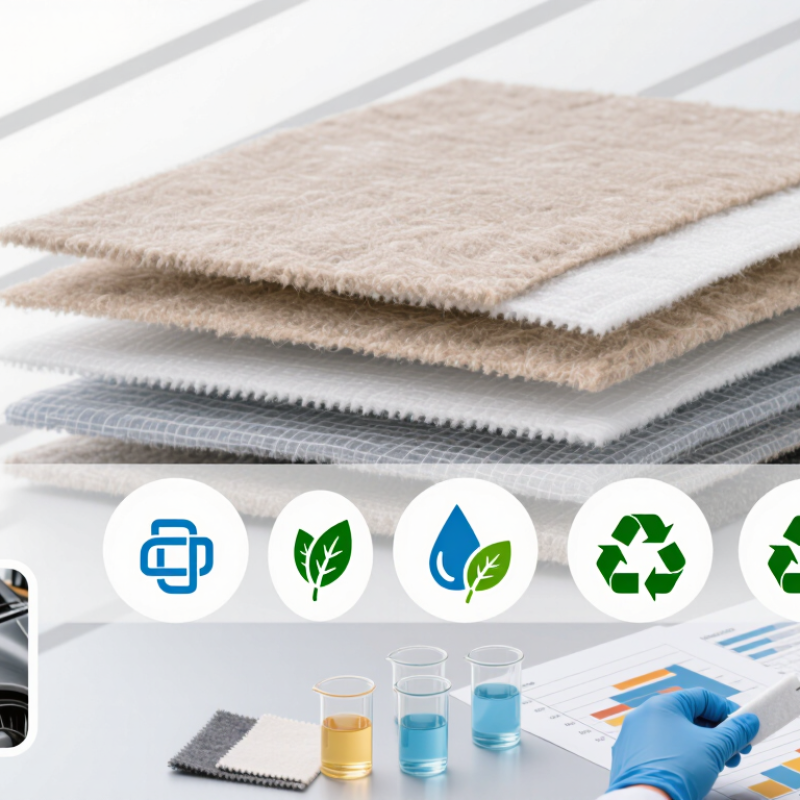
Spunlace nonwoven fabric is made by entangling loose fibers with fine, high-pressure water jets. The process creates a flexible web without relying on a conventional chemical binder. Fiber type, basis weight, jet energy, and finishing all affect the result. A cotton-rich wipe may feel soft and absorb quickly, while synthetic fibers can improve strength and dimensional stability. Feel the difference. A fabric’s softness alone does not reveal how it performs when wet.
Key properties include basis weight, tensile strength, elongation, absorbency, linting, and surface texture. Compare test results measured with consistent methods, such as ISO 9073 procedures for mass per unit area and tensile properties. Smithers’ 2024 market analysis estimates the global spunlace nonwovens market at roughly US$9 billion in 2023, reflecting broad demand across wipes and hygiene applications. Market growth does not identify the right grade for a specific use, though. A higher basis weight can add coverage but may increase material use and slow drying. I would also check wet strength and lint release under realistic use conditions; a neat lab result can miss what happens after repeated wiping. Define the end use before comparing samples.
Defining Application Requirements and Performance Priorities
Start with the task, not the fabric weight. A surface-cleaning wipe may need fast liquid pickup and low lint, while a protective gown layer may depend more on drape, coverage, and strength. Write down what the material will touch, whether it will be used wet or dry, and how it will be handled. Small details count. A wipe used on glass, for example, can leave visible fibers even when its absorbency looks excellent.
Set measurable priorities before comparing spunlace samples. Check basis weight, thickness, tensile strength in both directions, absorbency, and lint under conditions close to real use. For lotions or cleaning solutions, test the finished fabric with the actual liquid; water results alone may not predict performance. Ask for test methods and sample details, not just a specification sheet. Numbers need context.
Trade-offs are normal. A softer fabric may stretch more, and a heavier one may not absorb faster. It is tempting to choose the strongest sample, but stiffness can make it awkward to fold or wipe with. Try several samples on the intended surface, then inspect them after repeated handling. One test may still miss a problem. Record what worked, what failed, and which requirement matters most when priorities conflict.
Comparing Fiber Types, Fabric Weight, and Bonding Options
Choosing spunlace nonwoven fabric starts with the fiber, not the label. Viscose absorbs liquid quickly and feels soft against skin, while polyester generally dries faster and holds its shape. Cotton can add a familiar, natural hand feel, but its performance depends on the blend and finishing. Check the intended use: a wipe needs absorbency and wet integrity; a protective cover may need more strength. Touch samples dry and damp. The difference can be obvious.
Fabric weight, measured in grams per square meter, helps compare options, but it does not tell the whole story. A heavier sheet may feel more substantial, yet fiber blend and web structure also affect softness, drape, and strength. Try samples at the actual converting width and test them after folding, wiping, or applying liquid. Small details matter. Even a modest weight change can alter handling on a production line.
Spunlace fabric is bonded by high-pressure water jets that entangle fibers, often creating a soft, flexible web without added binders. Other bonding approaches, such as thermal bonding, may suit different fiber mixes but can produce a firmer feel. Ask suppliers for construction details and test the fabric under real conditions, including lint release and tear resistance. One awkward point: a sample may perform beautifully in the lab and disappoint on a fast line. Test before committing.
Evaluating Quality, Sustainability, and Supplier Reliability
Choosing spunlace nonwoven fabric in 2026 means looking beyond a soft hand feel. Compare fiber blend, basis weight, absorbency, and tensile strength in both dry and wet conditions. Rub a sample over a dark surface to check lint, then inspect its edges after cutting. Small details matter. A fabric that feels premium may still shed or weaken when saturated.
Sustainability claims need evidence. Ask for the recycled-content percentage, manufacturing energy and water data, and details about wastewater controls. Check whether those figures apply to the specific fabric, not just the supplier’s general operations. Disposal also depends on fiber composition and local facilities, so “biodegradable” alone tells you little. The paperwork can be imperfect; unclear boundaries deserve follow-up.
Supplier reliability is easier to judge through repeated performance than polished promises. Request samples from more than one production lot, along with test methods and batch records. Confirm how the supplier handles changes to fibers, weight, or finishing, and ask for realistic lead times. Keep a retained sample for comparison when shipments arrive. Ask for evidence. Even careful checks cannot prevent every variation, and a neat scorecard may hide a trade-off between softness, durability, and cost. Make those compromises visible before approving the fabric.
How to Choose the Best Spunlace Nonwoven Fabric in 2026?
Suggested procurement-planning weights, not published market measurements: assess fabric quality using relevant tests such as ISO 9073-1 for mass per unit area, ISO 9073-3 for tensile properties, and ISO 9073-6 for absorption. Evaluate sustainability through verifiable material and environmental disclosures, and supplier reliability through traceability, delivery performance, and corrective-action processes. Adjust the weights to suit the product and application.
Testing Samples and Selecting the Best Fabric for 2026
In 2026, choosing spunlace nonwoven fabric should begin with the job it must perform, not the broadest specification on a data sheet. Write down the intended use, contact surface, expected moisture, and handling conditions before requesting samples. Small details matter. Compare samples at the same basis weight and dimensions, then condition them in the same room for 24 hours. Otherwise, differences may reflect the test setup rather than the fabric.
Check basis weight, thickness, tensile strength in both directions, absorbency, and lint release using repeatable methods. For wipes, wet strength and liquid uptake may outweigh a soft hand feel. For filtration or coverings, pore structure and uniformity may matter more. Use a simple checklist and record results, including failures. Test under realistic pressure. A wipe pulled across a textured surface, for example, can reveal pilling or edge damage that a bench reading misses.
Choose a fabric that consistently meets essential thresholds, rather than one sample with a single impressive result. Repeat key tests on several pieces, and request a fresh production lot before making a large commitment. One sample won’t tell the whole story. I would be cautious about treating a clean first trial as proof of stable production quality. That caution can feel slow, but it helps expose mismatches between laboratory readings and everyday performance.
How to Choose the Best Spunlace Non Woven Fabric in 2026? - Testing Samples and Selecting the Best Fabric for 2026
Compare samples under the same test conditions and select a fabric based on its intended use. The figures below are illustrative screening results for anonymous sample types, not specifications for a particular supplier or product.
| Sample | Typical construction | Basis weight
(g/m²) | Thickness
(mm) | Tensile strength, MD / CD
(N/50 mm) | Water absorption capacity
(g/g) | Linting
(relative) | Potential fit |
| A | Viscose / polyester, 70 / 30 | 45 | 0.38 | 55 / 28 | 6.5 | Low | General-purpose wipes; balanced absorbency and strength |
| B | Viscose / polyester, 80 / 20 | 60 | 0.52 | 62 / 34 | 7.8 | Low to medium | Higher-absorbency wipes and cleaning cloths |
| C | 100% polyester | 50 | 0.34 | 78 / 46 | 3.2 | Very low | Durable wiping where low lint and strength matter more than absorbency |
| D | 100% viscose | 50 | 0.47 | 38 / 20 | 8.6 | Medium | Absorbent disposable wipes; check wet strength for the use case |
| E | Viscose / polyester, 50 / 50 | 40 | 0.30 | 48 / 26 | 4.8 | Low | Lightweight wipes and applications prioritizing a thinner sheet |
Sample-testing checklist
| Test or check | What it helps assess | How to compare samples |
| Basis weight and thickness | Material consistency, coverage, and hand feel | Measure multiple locations; use the same conditioning and test procedure for every sample. |
| Tensile strength, MD and CD | Resistance to tearing along and across the machine direction | Record dry and, where relevant, wet results. Confirm strip width, gauge length, and test conditions. |
| Absorption and liquid uptake | How much liquid the fabric takes up and how quickly it wets | Use the intended test liquid and a consistent immersion, draining, and weighing procedure. |
| Linting and surface integrity | Fiber release and suitability for low-lint wiping needs | Compare under the same rubbing method, load, surface, and number of wipe cycles. |
| Application trial | Performance in the actual converting or end-use process | Check dispensing, softness, durability, residue, and compatibility with any lotion or cleaning solution. |
Method note: Common reference methods include ISO 9073-1 for mass per unit area, ISO 9073-2 for thickness, and ISO 9073-3 for tensile properties. Confirm the current edition and relevant method details with the testing laboratory. Absorption and lint results depend strongly on the procedure, so compare samples using one agreed protocol.