
Blog

Top Profiled Aluminium Manufacturers for Global Buyers

Global buyers comparing Profiled Aluminium manufacturers are not just selecting a shape. They are choosing a supplier’s control over alloy chemistry, die design, tolerances, finishing, and delivery. A profile may look clean in a catalogue, yet small differences in wall thickness or surface treatment can affect assembly, corrosion resistance, and scrap rates. Details matter.

The market is substantial. The International Aluminium Institute reports that around 75% of all aluminium ever produced remains in use today, reflecting the metal’s long service life and recyclability (IAI, “Aluminium Recycling”). The Institute also projects strong growth in aluminium demand as electrification, construction, transport, and renewable energy expand. These trends make supplier capability and traceability increasingly important—not just unit price.

IAI Secretary General Miles Prosser has emphasized the industry’s need to advance aluminium recycling and reduce emissions. This introduction treats that as a practical buying question: can a manufacturer document its material sources, recycled content, quality controls, and environmental claims? Buyers should compare certificates, sample parts, inspection records, and realistic lead times. Ask to see the evidence.

There is no perfect shortlist. A manufacturer strong in architectural systems may not suit precision machinery or high-volume transport components. Regional standards and finishing options also vary. That sounds obvious. It is easy to overlook when a quotation arrives quickly. The sections ahead profile manufacturers for global buyers, while highlighting the capabilities and checks that help turn a promising supplier into a dependable one.
Top Profiled Aluminium Manufacturers for Global Buyers

Understanding the Profiled Aluminium Manufacturing Industry

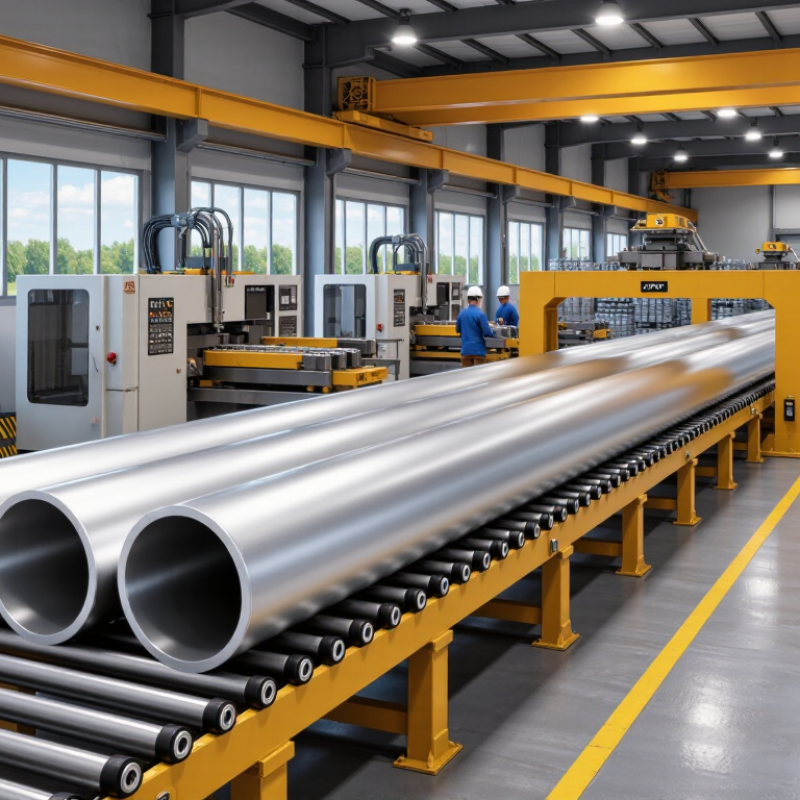
Profiled aluminium manufacturing turns solid billets into precise shapes through controlled heating and extrusion. A billet is warmed, then pressed through a steel die that defines the profile’s cross-section. Die design matters: a narrow channel may fill unevenly, while an overly complex shape can increase scrap and inspection needs. The extrusion then cools, stretches, and may receive heat treatment to meet specified strength and hardness. Small process changes can affect straightness, surface finish, and dimensional accuracy.

Manufacturers typically check dimensions with gauges or coordinate-measuring equipment, while visual inspections reveal scratches, die lines, and other surface defects. Buyers should compare drawings, alloy and temper specifications, tolerance requirements, and documented inspection methods before approving a sample. Ask how the producer handles changes between trial runs and regular production. Ask about packaging, too; long profiles can bend during transport if they are poorly supported. A neat sample is useful, but it does not prove consistent production. That distinction is easy to miss. Even careful quality systems cannot remove every variation, so clear acceptance criteria and traceable records matter.

How Aluminium Profiles Are Designed and Manufactured

A sound aluminium profile begins with its job, not its shape. Designers define loads, span, fixing points, and exposure before sketching hollow chambers or ribs. A thin wall may save weight, but it can distort during extrusion or fail around a screw boss. Die makers then check metal flow, bearing lengths, and corner radii. Small details matter. The International Aluminium Institute reported 70.6 million tonnes of primary aluminium production worldwide in 2023, a scale that makes consistent process control essential.

Manufacturing starts by heating an alloy billet and forcing it through a shaped steel die. The emerging profile is cooled, stretched straight, cut to length, and heat-treated when the alloy requires it. Operators inspect dimensions, surface marks, and straightness; machining or coating may follow. In practice, drawings still miss details. A narrow slot can trap coating, while a sharp internal corner can complicate die flow. The International Aluminium Institute estimates that around 75% of all aluminium ever produced remains in use. That supports designing profiles for repair and recycling, though coatings and mixed materials can make recovery less straightforward.

Key Criteria for Comparing Global Manufacturers

Global buyers should compare profiled aluminium manufacturers on measurable process control, not catalogue breadth. The International Aluminium Institute reported about 70.6 million tonnes of global primary aluminium production in 2023. That scale makes consistent alloy chemistry and traceable batches essential. Ask for extrusion tolerances, straightness data, surface-finish limits, and inspection records for the actual profile. Request a sample with the same alloy, temper, and finish as the planned order. Numbers matter. A polished sample alone says little about production consistency.

Sustainability and delivery deserve equal scrutiny. The International Energy Agency’s 2023 Tracking Clean Energy Progress report identifies aluminium as responsible for roughly 2% of global emissions. Ask manufacturers to explain their emissions data, including whether it covers electricity use and upstream material. Compare tooling lead times, minimum order quantities, packaging, and documented shipment performance. Ask how rejected profiles are handled and whether corrective actions are recorded. A neat brochure is not proof. I would still leave room for doubt: one audit cannot predict every production run, and a low quoted price may hide costly delays or rework.

Leading Manufacturers and Their Regional Strengths

Regional strengths vary across profiled aluminium manufacturing hubs. East Asian suppliers often offer broad extrusion capacity and flexible finishing options, useful for large or mixed product orders. European manufacturers may emphasize precision machining, engineering support, and documented quality controls. North American facilities can offer shorter domestic shipping routes and closer project coordination. These are tendencies, not guarantees; capability depends on the individual plant, its equipment, and the specification.

Tips: Request recent inspection records, alloy certificates, and samples with the proposed finish. Ask how the manufacturer controls wall thickness and straightness. Details matter. Compare lead times with shipping time, not production time alone.

During evaluation, discuss the actual cross-section, alloy, temper, and intended environment. For example, a long, narrow frame may need tighter straightness control than a simple trim profile. Check whether the supplier can manage die trials, cutting, drilling, and protective packaging in-house. Regional reputation helps narrow a search, but it cannot replace factory-level evidence. I would not assume the nearest supplier is automatically the best fit; that is an easy shortcut, and sometimes a costly one. Request a clear tolerance table and confirm who handles corrective action if parts arrive out of specification.

Top Profiled Aluminium Manufacturers for Global Buyers - Leading Manufacturers and Their Regional Strengths

Manufacturing Region Common Regional Strengths Typical Product Capabilities Industries Commonly Served Buyer Evaluation Points
China Large-scale production capacity, broad supplier networks, and extensive availability of standard and custom extrusion profiles. Architectural profiles, industrial sections, heat-sink shapes, and profiles made to customer drawings; capabilities vary by producer. Construction, transport, electronics, machinery, and consumer products. Check alloy and temper specifications, dimensional tolerances, tooling ownership, surface-finish samples, inspection records, and export documentation.
Germany and Central Europe Established engineering and manufacturing base, with strong emphasis on technical specifications, process control, and integration with industrial supply chains. Precision extrusions, machined profiles, and application-specific components; available services differ among manufacturers. Automotive, machinery, building systems, electrical equipment, and industrial automation. Review technical approvals, traceability, tolerance capability, quality-management documentation, and the supplier’s ability to meet delivery schedules.
Italy Strong presence in design-led manufacturing and architectural applications, supported by established aluminium processing and finishing industries. Architectural and decorative profiles, custom extrusions, and finished or fabricated components, depending on the supplier. Building and construction, furniture, interior systems, transport, and industrial products. Assess finish consistency, colour matching, fabrication scope, sample approval procedures, and compliance with project-specific requirements.
Turkey Geographic access to European, Middle Eastern, and nearby regional markets, with a developed base of extrusion and architectural-profile producers. Construction profiles, window and door systems, industrial sections, and customer-designed extrusions. Construction, building systems, infrastructure, transport, and general industry. Confirm applicable standards, coating or anodizing specifications, export experience, packing requirements, and lead times for tooling and production.
India Growing domestic demand and a broadening manufacturing base serving infrastructure, construction, transport, and industrial markets. Architectural profiles, standard and custom extrusions, and selected fabricated products; production and finishing capabilities vary by facility. Construction, rail and transport, renewable energy, electrical applications, and machinery. Verify plant-level capacity, alloy availability, process certifications, independent inspection options, and logistics arrangements for the destination market.
North America Regional supply networks and manufacturers serving domestic construction, transport, and industrial customers; available capacity and specialization vary by location. Architectural and industrial extrusions, custom profiles, and value-added cutting or machining where offered. Building products, automotive and transport, aerospace supply chains, energy, and industrial equipment. Check domestic-content or project requirements, alloy and temper documentation, production capacity, lead times, and freight costs.

Regional profiles describe broad market tendencies, not guarantees about individual suppliers. Verify capabilities, certifications, product compliance, and commercial terms directly with each manufacturer.

How Global Buyers Assess Suppliers and Plan Procurement

Global buyers should compare aluminium profile suppliers against the drawing, not a brochure. Specify alloy and temper, dimensions, straightness, wall-thickness tolerance, surface finish, and acceptable defects before requesting quotes. Ask for recent inspection records, material certificates, and a first-article sample measured at critical points. Price is one signal. A low quote may hide tooling charges, extra sorting, or long production changeovers.

Capacity and delivery planning matter. The International Aluminium Institute’s 2021 Aluminium for Climate report projects global aluminium demand could rise about 40%, reaching 119 million tonnes by 2030. Buyers should check press availability, die-maintenance schedules, monthly output, and peak-season allocation. Request a production plan tied to your forecast, then add time for packaging and transit. A spreadsheet is not a shipment plan.

Environmental claims also need evidence. The International Energy Agency’s 2023 Aluminium report estimates sector emissions at about 1.1 gigatonnes of CO2 in 2022, roughly 2% of global emissions. The International Aluminium Institute says recycling aluminium can use about 95% less energy than primary production. Ask suppliers to document recycled content, calculation boundaries, and energy sources. One awkward detail: recycled-content figures are difficult to compare when methods differ. A site audit or independent verification can help resolve that gap.

Go to Top