
Blog

What Is a Stained Glass Hanging Panel?

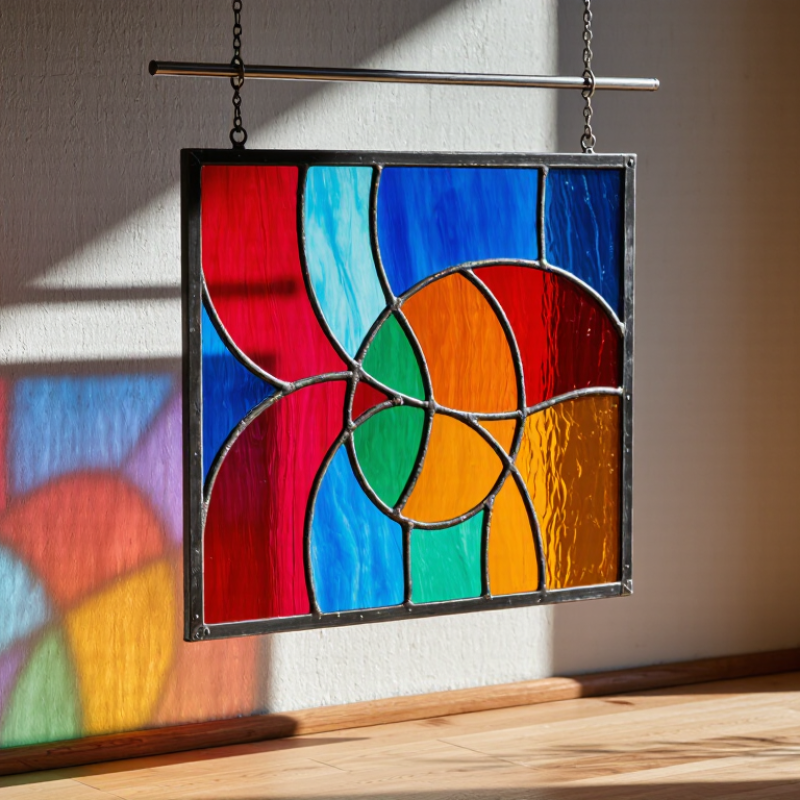
A Stained Glass Hanging Panel is a freestanding artwork made from colored glass pieces joined by lead or copper foil. Unlike a fixed window, it hangs from a frame, hook, or chain. Daylight passes through its reds, blues, and amber tones, then leaves shifting patches on a wall or floor. Small details matter: the hanging point, the panel’s weight, and the direction of the light.

Louis Comfort Tiffany, the American glass artist and designer, is often credited with saying, “Color is to the eye what music is to the ear.” That idea helps explain why a panel can feel different in morning light than it does near sunset. The glass itself does not change, but its colors and shadows do. A well-made piece balances pattern, glass selection, and sturdy construction; no single design suits every room.

It is not just decoration. A panel can mark a window, soften a bare corner, or become a small focal point without blocking the whole view. Look closely at the joins and edges. Are they neat? Does the panel hang level? These checks are practical, though they cannot tell you everything about its history or workmanship. Even an attractive piece may need careful placement away from knocks and unstable fixtures. That part is easy to overlook. A little doubt is useful: beauty matters, but so does safe, thoughtful display.
What Is a Stained Glass Hanging Panel?

Definition and Key Features of a Stained Glass Hanging Panel

A stained glass hanging panel is a decorative glass artwork designed to hang in front of a window, on a wall, or within an interior opening. Unlike a permanent stained glass window, it can usually be moved without changing the building. Its colored glass pieces are joined with lead came or copper foil, then supported by a frame or hanging hardware. Light changes everything. Sunlight can make the same panel look brighter at noon and softer in the evening.

Key features include translucent color, visible joints, and a design that can be viewed from both sides. Some panels use clear or textured glass to add contrast, while others rely on bold shapes and saturated colors. The term is not perfectly standardized; sellers and makers may use it for different sizes and construction styles. That matters. A panel’s weight, edge finish, and attachment points affect where it can hang safely. Check that the support is suitable for the panel, and keep the glass away from hard impacts. A small flaw in alignment may be noticeable up close, even when the overall design feels balanced.

Glass, Materials, and Structural Components

A stained glass hanging panel combines colored glass with a framework that keeps each piece in place. The glass may be transparent, textured, or opalescent, changing how daylight falls across a room. A rippled pane can soften a sharp beam; a clear piece may cast a brighter patch on the wall. Glass thickness and panel size affect its weight, so material choices matter beyond appearance.

Two common construction methods use lead came or copper foil. Came forms channels around glass edges, while copper foil wraps individual pieces before soldering. Soldered joints connect the assembly, and a firm perimeter came helps define its outer edge. Larger panels may need reinforcement bars to limit flexing. Not just decoration. Hanging loops should connect to a suitably reinforced frame, not rely on a weak solder seam alone. Small details count. Hand-cut pieces can vary slightly, and a joint may look less uniform than expected; that is worth checking, not automatically hiding. Before hanging a panel, consider its weight, support, and location, especially where a fall could cause injury. A secure installation is part of the panel’s structure.

What Is a Stained Glass Hanging Panel?

Representative dimensions of common glass and joining materials

A stained glass hanging panel is made from shaped glass pieces joined with lead came or copper foil and solder. The bars show example dimensions: glass thickness, lead came face width, and copper foil tape width. Actual sizes vary by panel design, glass thickness, and construction method; these measurements are not directly equivalent.

How a Hanging Panel Is Designed and Made

A stained glass hanging panel is designed to sit in a window or another bright spot, where daylight can pass through its colored pieces. The maker begins with a measured opening and a sketch, deciding where the panel will hang and how much light it should admit. A simple outline often works best. Too many small shapes can make cutting and assembly harder.

The sketch is divided into individual glass pieces, with attention to color, texture, and the strength of each section. Clear glass can brighten a room, while textured glass softens views and breaks light into uneven patterns. Light matters. Before cutting, the maker checks that the pattern fits the intended space and leaves room for hanging hardware. A paper pattern guides each cut; the edges are then ground until neighboring pieces meet closely.

The pieces are joined using copper foil and solder, or fitted into lead came, depending on the design and construction method. Soldered seams need steady hands and even heat. Not every edge behaves. Small gaps may appear, so careful fitting can reduce weak joints and awkward lines. Once assembled, the panel is cleaned and inspected for loose connections. The final rings or hooks must support its weight, and the mounting point should be secure. Even a well-made panel can look different once sunlight shifts across it.

Common Styles, Shapes, and Uses

A stained glass hanging panel is a decorative piece suspended in front of a window, where daylight can pass through colored glass. Common styles range from crisp geometric patterns to botanical designs with leaves, flowers, or curling vines. Some borrow from Art Nouveau, while abstract panels use blocks of color and irregular lines. The style changes the mood: clear shapes feel orderly, while flowing motifs can soften a plain room.

Shape matters, too. Rectangular panels suit narrow windows, round ones make a compact focal point, and arched tops echo traditional window details. Small details matter. Textured glass can blur a view while still admitting light; pale colors often keep a room brighter than dense, dark sections. A panel may hang in a kitchen window, beside a reading chair, or in a small entryway. It can add color without replacing the window itself. Check that the hooks and hanging chain are secure, and leave enough clearance for the panel to move gently without striking the glass. Sunlight shifts throughout the day, so colors may look warmer in the afternoon than they do in the morning. That variation is part of the appeal, though it can make choosing a spot less predictable. Some panels also show slight differences in glass texture or alignment; those small irregularities are not always flaws.

What Is a Stained Glass Hanging Panel? - Common Styles, Shapes, and Uses

A stained glass hanging panel is a decorative assembly of colored or textured glass held together with came or other joining methods, designed to hang in a window or from a suitable support. It can filter daylight, add color, and provide a decorative focal point.

Style Common Shapes Typical Visual Features Common Uses Light and Privacy
Geometric Rectangles, squares, diamonds, and repeating grids Orderly patterns, straight lines, and contrasting glass colors or textures Windows, room dividers, and simple decorative accents Clear or lightly textured pieces admit more light; opaque pieces increase screening.
Floral and botanical Arched panels, circles, ovals, and rectangular panels Flowers, leaves, vines, or branches arranged as a central motif or border Living areas, sunrooms, and decorative window displays Colorful glass creates patterned light; textured glass can soften views through the panel.
Abstract Freeform, asymmetrical, or irregular compositions Expressive color blocks, varied textures, and nonrepresentational designs Contemporary interiors and art-focused window displays Light transmission depends on the mix of clear, colored, and opaque glass.
Traditional or pictorial Rectangular panels, arches, and roundels Recognizable scenes, figures, symbols, or decorative borders Focal points in windows, niches, and interior display areas The image is most visible when light passes through the panel; privacy varies by glass choice.
Minimal or modern Narrow rectangles, circles, and clean-edged panels Limited colors, open space, and uncomplicated lines Small windows, contemporary rooms, and understated accents Clear or lightly tinted sections preserve a brighter, more open appearance.
Sun-catcher panel Small circles, squares, diamonds, and compact custom outlines A small-scale design intended to catch direct or indirect daylight Hanging in a window as a decorative accent Usually chosen for color and light effects rather than substantial privacy or shading.

Practical note: A hanging panel is decorative and should be installed with a secure hanging method appropriate to its weight and location. It is not automatically a substitute for a window, safety glazing, or a room divider.

Hanging, Care, and Safety Considerations

What Is a Stained Glass Hanging Panel?

A stained glass hanging panel is a framed arrangement of colored glass, joined with lead or copper foil and displayed in a window or before a light source. Its weight and construction determine how it should be supported. Before hanging it, check the frame, joints, and hanging loops for looseness or damage.

Use hardware anchored into a wall stud or a suitable structural support, and choose a rated hook with capacity comfortably above the panel’s measured weight. Keep the panel away from doors, busy walkways, and places where children or pets might bump it.

The National Safety Council’s Injury Facts reports about 8.8 million fall-related emergency department visits in the United States in 2021. That figure is not specific to glass panels, but it is a useful reminder to reduce avoidable trip and impact hazards.

Small details matter. Clean with a soft, dry cloth; avoid abrasive pads and harsh cleaners that may damage the glass or came. I would recheck the hanging points periodically, even when nothing seems wrong.

Tips: Hang the panel level, leave a little clearance from the window, and inspect the hardware after moving or cleaning it. If a joint looks cracked or a hook shifts, take the panel down until it can be assessed.

Go to Top