
Blog

Top 10 Sliding Glass Door Suppliers in China?

Choosing among the top 10 sliding glass doors suppliers in China requires more than comparing catalog prices. A bright showroom may look impressive, but the real test begins with a sample frame, a moving roller, and a clear technical specification. Buyers should examine glass thickness, tempering, laminated options, thermal breaks, drainage design, seals, locking systems, and hardware durability.

Ludwig Mies van der Rohe, a major influence on modern architectural glazing, said, “God is in the details.” His words remain relevant here. Small details matter. A poorly aligned panel can create noise, air leakage, or difficult operation after installation. Reliable suppliers should provide drawings, performance data, production photographs, and practical installation guidance. They should also explain lead times honestly, including delays caused by customization or shipping.

This guide reviews ten Chinese suppliers through a buyer-focused lens. It considers manufacturing experience, export capability, product consistency, customization, quality control, and after-sales communication. Certifications can support trust, but they do not replace careful verification. Ask for recent project references. Request hardware samples. Check whether the quoted system includes glass, rollers, handles, screens, and packaging.

No ranking is perfect. Supplier strengths change, and a company suited to a villa may not fit a high-rise project. That limitation deserves attention. Still, a structured comparison can reduce costly surprises and reveal which sliding glass doors manufacturers offer dependable value, not merely attractive photographs.
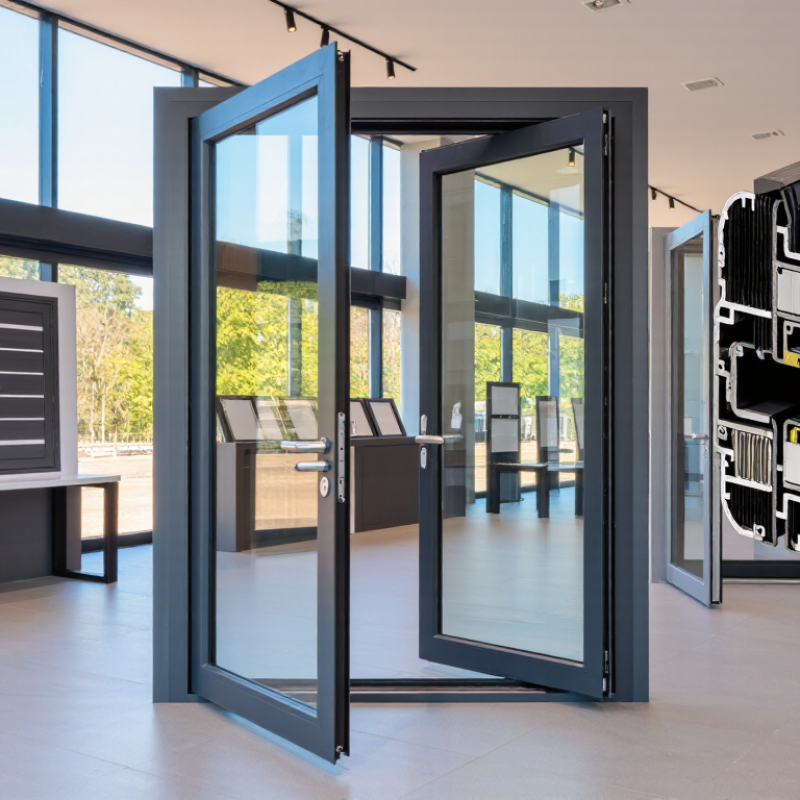
Top 10 Sliding Glass Door Suppliers in China?

What Are Sliding Glass Doors and Why Choose Chinese Suppliers?

Sliding glass doors combine large glass panels with horizontal tracks, allowing daylight and ventilation without the swing space required by hinged doors. They are common in apartments, hotels, offices, and coastal homes. Their performance depends on more than appearance. Frame strength, roller design, glass thickness, drainage, sealing, and installation accuracy all affect daily use.

The U.S. Department of Energy reports that windows can account for 25%–30% of residential heating and cooling energy use. A poorly sealed sliding door may therefore increase indoor heat gain, drafts, and condensation. Low-E insulated glass, thermally improved frames, and multi-point locking systems can reduce these problems. However, specifications must match the local climate. A strong coastal product may be excessive for a dry inland project.

Chinese suppliers attract buyers through broad manufacturing capacity, flexible customization, and competitive production costs. Grand View Research’s 2024 market assessment projects steady growth in the global sliding glass door sector, with demand linked to renovation and energy-efficient construction. Chinese factories often support custom heights, powder-coated finishes, triple-track systems, and different glass configurations. Ask for test reports, air and water resistance results, hardware load ratings, and sample corner joints. A polished catalog proves little. I would also check replacement-part availability, packaging photos, and factory quality records. The weak point is easy to miss: lower pricing can become expensive when installation guidance is vague or tolerances are inconsistent.

How to Define the Selection Criteria for China’s Top Suppliers

A reliable sliding glass door supplier should be judged by evidence, not showroom appearance. Start with manufacturing experience in residential, commercial, or custom projects. Ask for dated project references and production photos. A polished showroom can mislead. The factory should explain its aluminum grades, glass configuration, seal systems, rollers, locks, and drainage design in clear terms.

Quality control needs measurable checkpoints. Request material inspection records, dimensional reports, glass safety documentation, and water, air, and wind performance results where applicable. Confirm whether testing comes from an independent laboratory. Review how the supplier manages surface defects, warped frames, broken glass, and incorrect hardware. Small details matter. A two-millimeter alignment error can affect installation and long-term sealing.

Capacity is another selection criterion, but bigger does not always mean better. Compare sample quality, production lead time, packaging methods, loading plans, and replacement procedures. Ask who checks the doors before shipment and how claims are documented. Communication also deserves a score: clear drawings, stable quotations, prompt technical replies, and realistic delivery promises show operational maturity. Check warranty terms carefully, especially exclusions for installation or coastal exposure. Supplier evaluation is rarely perfect; early samples may not represent mass production, and published test data may need independent verification. A factory audit, prototype review, and written approval process reduce that uncertainty. Үнэ

Which Ten Chinese Suppliers Lead the Sliding Glass Door Market?

China’s sliding glass door market is led by ten supplier groups with different strengths, not identical product lines. The strongest manufacturers combine aluminum processing, tempered glass production, hardware sourcing, and export support. Some focus on slim-frame doors for apartments, while others build heavy systems for villas, hotels, and commercial projects. Their workshops often include CNC cutting, powder-coating lines, glass tempering equipment, and sample assembly areas.

A reliable comparison should examine more than catalog photos. I would check profile thickness, roller capacity, drainage design, glass certification, and installation tolerances. Factory records matter. So do test reports, batch inspections, and response times after a warranty claim. Several leading suppliers offer customized colors, laminated glass, thermal-break frames, and mosquito screens. Their advantage is practical coordination. One factory can manage several connected processes.

My initial shortlist was too generous. Attractive showrooms did not always prove stable quality. The better ten suppliers provide measured drawings, corner samples, packing details, and clear replacement procedures. Ask for a full-size sample. Small rollers may feel smooth today but fail under repeated use. Coastal projects also need stronger corrosion protection. This point is easy to overlook. Buyers should compare lead times honestly, because custom profiles can extend production by weeks. Supplier leadership is therefore measured by consistent delivery, documented testing, and useful technical support—not by price alone.

How to Compare Products, Customization, Quality, and Pricing

When comparing the top ten sliding glass door suppliers in China, start with product structure, not catalogue photos. Check aluminum alloy thickness, track design, glass configuration, drainage, rollers, and locking points. Grand View Research’s 2024 architectural glass market analysis highlights energy efficiency and customized specifications as major purchasing factors. Ask each supplier for U-value, SHGC, wind-load, and water-tightness data. The U.S. Department of Energy reports that low-emissivity glazing can reduce window energy loss by approximately 30% to 50% compared with standard glass.

Customization should be tested through drawings and samples. Confirm opening size, corner joints, screen systems, colors, glass coatings, and packaging protection. A capable factory should provide shop drawings, production tolerances, inspection records, and a clear replacement policy. ISO 9001 certification is useful, but it does not prove every shipment is perfect. Inspect finished doors before loading. Small gaps matter.

Pricing needs a landed-cost comparison. Include tooling, minimum order quantity, sample charges, export packaging, inland delivery, freight, duties, installation accessories, and warranty support. A low quotation can hide thin profiles or weak hardware. That mistake is common. Compare the same specification line by line, then request a pilot order. Reports from the International Trade Centre show that transport and logistics costs can materially affect manufactured-product trade prices, so the cheapest factory quotation may not be the cheapest delivered solution. Supplier selection remains partly technical and partly practical. Perfect comparisons are rare.

Top 10 Sliding Glass Door Suppliers in China? — How to Compare Products, Customization, Quality, and Pricing

Rank Anonymous Supplier Profile Primary Product Strength Typical System Options Customization Capability Quality and Compliance Checks Typical MOQ Indicative Lead Time Indicative FOB Price Best-Fit Application Recommended Buyer Verification
1 Profile A
Premium Architectural Systems
High-end thermally broken aluminium sliding doors with large glazed panels. 2-track 3-track Lift-and-slide Pocket door Custom frame depths, corner configurations, concealed drainage, hardware finishes, and project-specific dimensions. Request EN 14351-1 or equivalent test reports, air-tightness results, water-tightness results, wind-load data, and thermal performance calculations. 1 project or 10–20 units 45–70 days US$320–650/m² Luxury villas, hotels, and high-performance residential projects. Approve shop drawings, inspect powder-coating thickness, verify hardware origin, and conduct pre-shipment inspection.
2 Profile B
Mid-to-High-End Fabricator
Balanced range of thermal and non-thermal aluminium sliding doors for export projects. Thermal break Non-thermal Double glazing Triple glazing Moderate-to-high flexibility in colour, glass specification, panel size, track layout, insect screens, and locks. Verify aluminium alloy and temper, coating certification, glass safety treatment, sealant compatibility, and finished-product test records. 20–50 units 35–55 days US$220–480/m² Residential developments, apartment upgrades, and standard commercial buildings. Compare complete bills of materials and obtain a sample corner, roller, lock, and glazing unit before ordering.
3 Profile C
Volume-Oriented Manufacturer
Cost-efficient standard aluminium sliding doors with repeatable production for larger orders. 2-panel 4-panel Standard track Tempered glass Strongest on standard sizes and colours; limited engineering changes without a larger quantity commitment. Check dimensional tolerances, glass thickness, roller load rating, corner-joint quality, packaging protection, and batch consistency. 100–300 units 25–45 days US$120–260/m² Builder-grade housing, renovation programs, and price-sensitive developments. Use a golden sample, approve a production sample, and specify acceptable tolerances in the purchase contract.
4 Profile D
Custom Project Specialist
Bespoke oversized sliding doors, corner openings, and special architectural geometries. Large panels Minimal frames Corner opening Flush sill High capability for unusual dimensions, concealed tracks, multi-panel movement, custom drainage, and special finishes. Usually project-based; engineering approval is required before production. 60–90 days US$400–900/m² Custom homes, resorts, architectural showcase projects, and premium renovations. Request structural calculations, panel weight limits, deflection data, installation details, and on-site technical support terms.
5 Profile E
Energy-Efficiency Focused Supplier
Thermally insulated sliding systems designed to improve U-value and reduce air leakage. Thermal break Low-E glass Argon IGU Warm-edge spacer Custom glass make-up, spacer selection, frame colour, glazing bar design, and performance targets. 10–30 units 45–65 days US$260–560/m² Cold-climate housing, green buildings, and projects with energy-code requirements. Verify whole-window U-value rather than glass-only U-value and request condensation, air, and water test data.
6 Profile F
Minimalist Interior-Exterior Systems
Slim-frame sliding doors emphasizing daylight, sightlines, and contemporary appearance. Slim sightline Recessed track Fixed-plus-slide Large glass Good finish and handle selection; engineering limits may apply to very large or heavy panels. 20–60 units 40–60 days US$240–520/m² Modern residences, restaurants, showrooms, and indoor-outdoor living spaces. Test roller smoothness under full panel weight and confirm sill drainage, brush seals, and replacement hardware availability.
7 Profile G
Commercial-Grade Door Producer
Durable systems for frequent operation and moderate-to-heavy commercial use. Heavy-duty rollers Multi-point lock Safety glass Accessible sill Custom opening sizes, hardware packages, access-control preparation, and commercial glazing options. 30–80 units 40–65 days US$230–500/m² Retail, offices, hospitality, schools, and public-facing facilities. Review cycle testing, roller service life, safety-glass documentation, lock compatibility, and maintenance requirements.
8 Profile H
Integrated Glass and Door Factory
One-stop production of frames, insulated glass units, laminated glass, and finished sliding assemblies. Tempered IGU Laminated glass Acoustic glass Aluminium frame Flexible glass composition, tint, acoustic performance, privacy options, frame colour, and panel layout. 30–100 units 35–60 days US$180–450/m² Projects requiring coordinated glass and aluminium procurement from one source. Verify glass markings, laminate interlayer, IGU spacer and seal quality, edge deletion, and breakage-replacement policy.
9 Profile I
Export-Ready OEM Supplier
Private-label and contract manufacturing with export packaging and documentation support. OEM sizes Private label Knock-down option Flat-pack packaging Custom labels, manuals, cartons, profiles, colours, hardware combinations, and regional installation details. 50–200 units 30–55 days US$140–350/m² Distributors, importers, home-improvement channels, and regional resellers. Confirm export references, packaging drop-test method, container loading plan, spare-parts list, and warranty response time.
10 Profile J
Small-Batch Custom Workshop
Flexible low-volume production for replacement doors, renovation work, and regional custom orders. Standard aluminium Custom colour Single opening Replacement panel Good flexibility for small quantities, non-standard colours, replacement dimensions, and simple hardware changes. 1–10 units 25–50 days US$160–380/m² Small residential projects, replacement work, and prototype orders. Perform factory audits, verify measurement procedures, inspect welds and assembly quality, and clarify after-sales support.
Comparison note: The prices, minimum order quantities, and lead times are indicative China export-market benchmarks for finished sliding glass door systems. Actual quotations vary according to opening size, aluminium thickness, glass specification, hardware, surface treatment, packaging, destination, Incoterms, testing requirements, and order volume. Buyers should obtain a dated quotation, approved shop drawings, product samples, and independent pre-shipment inspection before placing an order.

What Should Buyers Check Before Placing an Order?

What Should Buyers Check Before Placing an Order?

Choosing a sliding glass door supplier requires more than comparing catalog prices. Ask for the factory’s business license, production capacity, and recent export experience. Request project photos with dates and technical details. Polished images are not enough.

Confirm the glass specification in writing. Check thickness, tempering, lamination, heat treatment, and test certificates. Ask whether the glass meets the destination market’s safety requirements. Measure the opening carefully, including wall thickness, floor level, and drainage space. A small measurement error can delay installation.

Review the frame material, surface finish, rollers, locks, seals, and drainage design. Request a complete hardware list, not a vague “premium accessories” statement. Get a physical sample or approved drawing before mass production. The sample should show corner joints, track movement, handle strength, and seal contact. Test it yourself when possible.

Clarify packaging, inspection, replacement terms, lead time, payment stages, and delivery responsibilities. Use an independent inspection for large orders. One overlooked detail is the spare-parts plan. Rollers and seals may need replacement years later. Ask how those parts will be identified and supplied.

Do not rely on verbal promises. Keep every specification in the purchase contract. I have seen buyers focus heavily on unit price, then discover that installation labor, damaged panels, and missing hardware cost more. Cheaper is sometimes unclear, not better.

Go to Top