
Angle Steel looks simple: two flat legs meet at a right angle. Yet a few millimeters can change fit, load transfer, and fabrication time. In this introduction, “Maya Chen” is an illustrative expert voice, not a verified industry source. Her practical reminder is: “Choose the section for its job, not its name.” That matters when comparing equal-leg and unequal-leg sections, the two common profile types.
Equal-leg Angle Steel has matching sides, such as 50 × 50 mm, and suits frames, brackets, and supports needing balanced geometry. Unequal-leg steel, such as 75 × 50 mm, offers different reach on each side. It can help where space is tight or connections need one longer leg. Small detail. Big difference. Sections may also be hot-rolled or formed from sheet, and surface finishes can include plain, painted, or galvanized steel. These choices affect dimensions, strength, corrosion resistance, and cost; they are not interchangeable labels.
The right selection depends on more than profile shape. Designers and buyers should check the specified grade, thickness, dimensions, loading, connection method, and environment. A coastal railing faces different exposure from an indoor equipment frame. Even so, a quick comparison chart cannot replace verified product data or engineering review. This guide explores the top Angle Steel types and the practical differences that help narrow a choice. Some applications remain less clear than a neat table suggests—and that is worth acknowledging.
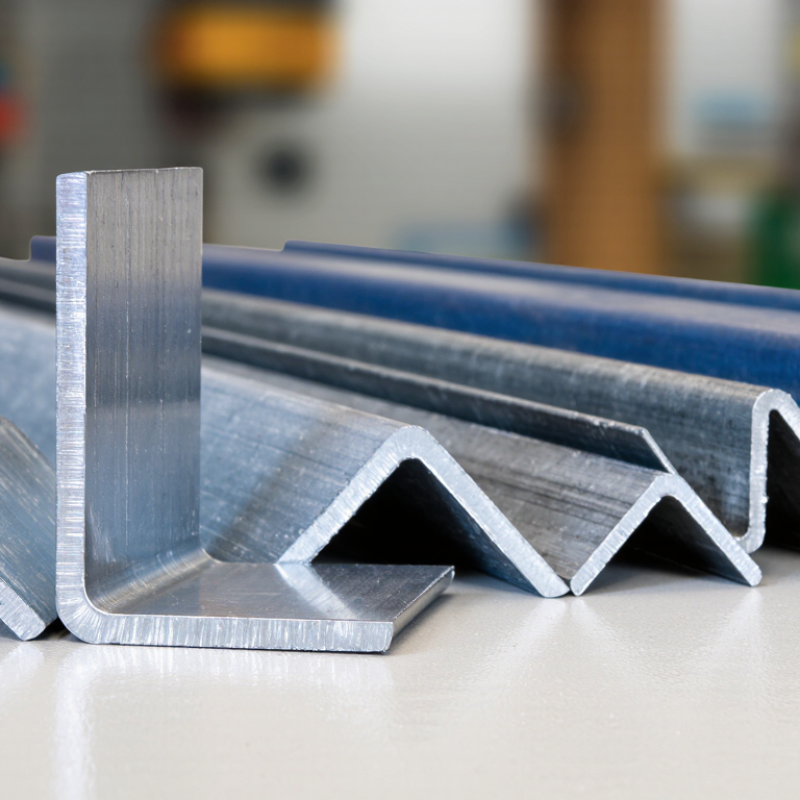
Equal-leg angle steel has two legs of equal width meeting at a 90-degree corner, forming a clear L-shaped section. This symmetry makes it useful for frames, brackets, roof trusses, and equipment supports. It can be connected by welding or bolting, depending on the design and service conditions. The World Steel Association reported global crude steel production of about 1.89 billion tonnes in 2024. That figure shows the scale of steel production, not demand for angle steel specifically. Buyers should check grade, leg dimensions, thickness, length, and applicable product specifications rather than relying on appearance alone.
Equal legs can simplify layout when a support needs balanced contact on two sides. For example, a 50 mm by 50 mm section can meet adjoining frame members with matching leg widths. Yet equal dimensions do not guarantee equal strength in every direction; thickness, connection details, unsupported length, and loading all matter. An engineer should verify the section against the actual design. One practical limitation: catalog dimensions may not match site conditions perfectly, so measure delivered stock before cutting.
Tips: Confirm dimensions and steel grade on the inspection documents. Check for twist, damaged edges, and heavy rust. A snug fit matters. If the angle will carry a structural load, use project-approved calculations and tolerances.

Equal-leg angle steel has two legs of the same nominal width. This chart compares representative sizes; product availability and specifications vary by standard and supplier.
Unequal-leg angle steel has two different flange widths, such as 75 × 50 mm, joined at a right angle. The longer leg can provide a wider fixing surface, while the shorter leg may fit a tight frame or bracket. That offset matters. The section’s orientation affects connection details and how loads act through the member. EN 10056-1:2017, published by the European Committee for Standardization, specifies dimensions for hot-rolled equal- and unequal-leg angles; covered leg sizes extend from 20 to 200 mm. Check the actual section table, not just the nominal dimensions, before specifying a part.
For practical selection, compare leg widths, thickness, steel grade, length, and hole or weld layout. A thin angle may flex or twist when a load acts away from its connection. A thicker section is not automatically the better choice. The World Steel Association’s World Steel in Figures 2024 reports approximately 1.89 billion tonnes of crude steel production in 2023. That figure gives useful industry context, but it does not establish the capacity of a particular angle. Verify capacity against the applicable design method and supplier test documentation. One detail is easy to miss: unequal legs can make site orientation inconsistent unless drawings clearly identify which leg faces the load. I would check that point before fabrication.
Hot-rolled angle steel is formed by heating steel billets and passing them through rollers into an L-shaped section. The two legs may be equal or unequal in length. That simple shape helps resist bending and makes angles useful for frames, braces, shelves, and equipment supports. In a fabrication shop, cut lengths are easy to handle, though heavier sections can be awkward to position accurately.
The surface often carries dark mill scale, and the corners may be less crisp than those of cold-formed products. That is normal, but it matters when appearance or close-fitting connections are important. Check leg dimensions, thickness, straightness, and the specified steel grade before ordering. For welded work, confirm the grade’s suitability and prepare the joint properly; mill scale can interfere with a clean weld. A practical detail: measure a sample piece rather than relying only on a label. Still, I would not treat every angle as interchangeable. Load, exposure, and connection design can change what is suitable.
Cold-formed angle steel is shaped from flat steel at room temperature, rather than formed through hot rolling. Its two legs meet at a crisp corner, creating an L-shaped section. You’ll often see it in light framing, shelving, equipment supports, and building components. Thin walls keep the section relatively light and easy to handle. But lower weight does not automatically mean it suits every load.
Tips: Check the leg lengths, steel thickness, coating, and intended load before choosing a section. For a real installation, follow project specifications and consult a qualified designer. Even a small change in thickness can affect stiffness.
Cold-formed angles can be made in equal-leg or unequal-leg profiles, offering flexibility when space is tight. Their dimensions can be consistent, which helps with repeatable assembly. Still, holes, cuts, and unsupported lengths may weaken a section. A detail that looks minor on a drawing can matter in service. I’d avoid selecting by appearance alone; actual load, connection design, and exposure conditions deserve careful review. Coatings also need attention, especially where edges are cut or moisture collects.
Slotted angle steel has a series of elongated openings along its sides, allowing components to be joined with bolts rather than welded. The slots make it practical for adjustable shelving, workbenches, equipment frames, and temporary storage racks. Fit the bolts. Then square the frame before tightening; small alignment errors can make a shelf wobble.
Perforated angle steel uses punched openings that may be round, oblong, or arranged in a regular pattern. The holes provide attachment points for brackets, panels, and light supports, while the angle profile helps resist bending. Slot and hole patterns vary by product, so check dimensions before planning a connection. A bolt that fits one pattern may not suit another.
These sections are often available in different thicknesses and finishes, including galvanized surfaces for better resistance to moisture. Still, a coating does not make every product suitable for outdoor exposure. Capacity depends on steel thickness, span, fasteners, and how the frame is supported. It is tempting to treat every opening as a universal adjustment point, but that assumption can be wrong. For a loaded rack, follow the supplier’s capacity data and inspect joints for looseness after assembly.
We serve the Greater Milwaukee area: Waukesha, Milwaukee, Washington, Ozaukee Counties and nearby areas, including Germantown, Menomonee Falls, Mequon, Cedarburg, Thiensville, Grafton, Jackson, West Bend, Hartland, Waukesha, Brookfield, West Allis, Franklin, Greenfield and more. We are Wisconsin’s Best Contractor for Replacement Windows, Doors, Siding & Roofing!
Address:
N112 W14880 Mequon Road
Germantown, Wisconsin 53022
Phone:
Email:
Monday: 9am – 5pm
Tuesday: 9am – 5pm
Wednesday: 9am – 5pm
Thursday: 9am – 5pm
Friday: 9am – 4:30 pm
Saturday by Appointment
Evenings by Appointment