
Blog

What Are the Top 10 Entry Doors for Global Buyers?

Choosing the right entry doors is rarely about appearance alone. A buyer in Toronto may prioritize thermal insulation, while a homeowner in Singapore may need ventilation, moisture resistance, and shade. Coastal properties face salt air. Urban apartments demand compact designs and dependable security.

Bob Vila, a longtime home-improvement expert, has said, “The front door is the focal point of your home’s exterior.” That observation still matters. A door can shape first impressions before visitors notice the roof, windows, or landscaping. It also affects comfort every day. Cold drafts, noisy hinges, weak locks, and fading finishes quickly expose a poor decision.

This guide examines the top 10 entry doors for global buyers, including fiberglass, steel, solid wood, pivot, double, glazed, smart, insulated, coastal, and custom options. Each category offers a different balance of durability, design, maintenance, and price. The best choice depends on climate, building orientation, household use, and local installation skills.

Details matter. Check the frame, threshold, weatherstripping, hinge quality, and certified lock system. A beautiful slab cannot compensate for a poorly fitted frame. Energy ratings also vary between regions, so buyers should compare recognized local standards rather than trust vague marketing claims.

There is no universal winner.

That is the uncomfortable part. Even a premium door may perform poorly when transport, storage, or installation is careless. The rankings ahead are therefore practical, not absolute. They reflect common global needs while acknowledging that every entrance has different conditions, risks, and expectations.
What Are the Top 10 Entry Doors for Global Buyers?

What Defines a High-Quality Entry Door for Global Buyers?

A high-quality entry door should protect a home without creating daily frustration. Global buyers often examine the slab, frame, hardware, glazing, and finish as one complete system. A dense core helps reduce outside noise and temperature transfer. Multi-point locks can improve resistance to forced entry when installed correctly. The frame matters just as much.

Look closely at the weather seals. They should compress evenly around the perimeter, without gaps at the lower corners. A well-fitted threshold helps limit rain, dust, and drafts.

For coastal homes, corrosion-resistant hardware and moisture-stable materials deserve special attention. In colder regions, thermal breaks can reduce condensation near the frame. Small details matter.

Ask for independently verified performance data, not only attractive photographs. Useful tests may cover air leakage, water penetration, wind pressure, impact resistance, and thermal performance. Requirements differ by location, so buyers should confirm local building rules with a qualified professional. Installation also affects results. Even an excellent door may leak after an uneven frame is fitted.

I once saw a beautiful entrance lose heat through a poorly sealed threshold. It looked perfect. It was not.

Door quality also includes repair access, replacement parts, clear warranties, and documented maintenance instructions. A finish can fade sooner than expected under strong sunlight, despite careful manufacturing. That possibility should be discussed openly. Reliable sellers explain limitations, testing conditions, and realistic service intervals before purchase.

How to Compare Entry Doors by Materials, Design, and Durability

What Are the Top 10 Entry Doors for Global Buyers?

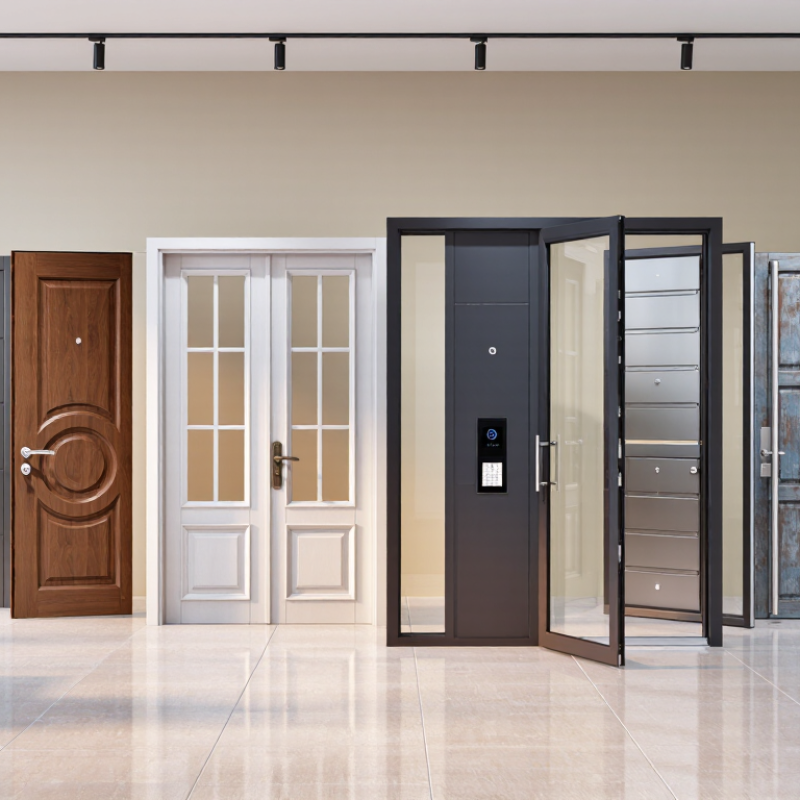
Global buyers can compare ten practical options: solid wood, engineered wood, fiberglass, insulated steel, aluminum, thermally broken aluminum, composite, glass-panel, pivot, and double entry doors. Material affects insulation, maintenance, security, and service life. Solid wood offers warmth and repairability, but it needs careful sealing in humid climates. Fiberglass resists moisture and dents well. Steel usually provides strong security, although exposed edges may rust without proper protection.

Design should follow climate and daily use. Look for insulated cores, weatherstripping, low-e glazing, and a tested threshold. The U.S. Department of Energy reports that windows can cause 25–30% of residential heating and cooling energy use. Doors have smaller areas, but poor seals still create noticeable drafts near floors. NFRC ratings help buyers compare U-factor, solar heat gain, and visible transmittance. A wide pivot door looks impressive. Yet, its weight can stress hinges and frames.

Durability requires more than a material label. Check water penetration, air leakage, wind-load testing, hardware quality, and repair access. The IEA and UNEP 2023 Global Status Report states that buildings consume about 30% of global final energy. Efficient doors support a better envelope, especially in extreme climates. WDMA and CSA standards also provide useful benchmarks for performance and installation. I would not treat any “maintenance-free” claim as absolute. Even strong doors need cleaning, alignment checks, and seal replacement. A beautiful entrance can still fail when the installer ignores drainage.

Which Entry Door Types Suit Different Climates and Building Styles?

Choosing among the top ten entry door types starts with climate, not appearance. In humid coastal areas, fiberglass, aluminum, and well-sealed composite doors resist swelling and salt-laden air. Steel offers strong security and clean lines, but exposed surfaces may need careful rust prevention. In cold regions, insulated fiberglass and solid wood doors reduce drafts when paired with quality weatherstripping. Wood feels warm and authentic, yet it demands regular sealing.

Hot, sunny climates require different thinking. A shaded wood door can suit a Mediterranean or tropical home, while a light-colored fiberglass door limits heat absorption. Louvered doors improve airflow, but they provide less protection against dust, storms, and noise. Glass entry doors brighten modern buildings, although low-emissivity glazing and strong frames are essential. More glass is not always better.

Building style also changes the shortlist. Double doors suit broad traditional façades and formal entrances. Pivot doors complement contemporary concrete or stone architecture, but their size can increase installation complexity. Sliding doors work well in compact urban homes, especially where swing space is limited. Arched wood doors can strengthen historic character, though custom fitting may be expensive. I once favored appearance over threshold height; that choice made daily access less comfortable. A professional inspection should check drainage, wall movement, local weather exposure, and the door’s actual installation quality. No type performs well when the frame is poorly fitted.

What Security, Energy, and Maintenance Features Should Buyers Assess?

When comparing the top 10 entry doors for global buyers, assess performance before appearance. A secure door should have a reinforced frame, a multi-point locking system, tamper-resistant hinges, and impact-resistant glazing where glass is used. Check the lock cylinder’s quality and request independent test documentation. Security ratings can vary by region, so local building requirements still matter.

Energy performance deserves equal attention. Look for a low U-value, continuous insulation, and tight weather seals around the frame. A thermal break can reduce cold surfaces and indoor condensation. Ask for tested air-leakage results, not vague claims such as “energy efficient.” In hot climates, consider solar-control glass and a light-coloured exterior. In colder regions, threshold insulation and water drainage become more important. Small details matter.

Maintenance often decides whether a door remains reliable after five years. Choose corrosion-resistant hardware, durable finishes, replaceable seals, and accessible adjustment points. Confirm that spare parts and qualified installers are available in the destination country. During site inspections, I have seen expensive doors fail because the frame was fitted out of square. A strong product cannot correct poor installation. That lesson is easy to overlook.

Buyers should also check drainage channels, warranty coverage, cleaning requirements, and protection against local humidity or salt air. A high laboratory rating may not reflect harsh coastal weather. Some specifications look impressive, but real-world performance can still disappoint. Compare test reports, installation instructions, and service response times before choosing.

How to Select the Best Entry Door for International Projects

What Are the Top 10 Entry Doors for Global Buyers?

How to Select the Best Entry Door for International Projects

For international projects, the best door depends on climate, building use, security needs, and local installation skills. A practical top-ten shortlist includes steel, fiberglass, solid wood, aluminum, glass, pivot, double, fire-rated, thermally broken, and acoustic entry doors. Each option solves a different problem. Steel offers strength, while fiberglass handles moisture with less maintenance. Solid wood creates warmth but needs careful sealing in humid regions. Aluminum suits modern façades, especially when paired with thermal breaks.

Check the project conditions before choosing a style. Measure wind exposure, rainfall, temperature changes, and daily traffic. Review the door’s air, water, and thermal performance data. A low U-value can improve comfort, but poor installation may cancel that benefit. Inspect the threshold, hinges, locks, drainage, and seal compression. They matter more than attractive photographs. For coastal sites, request corrosion-resistant hardware and test samples near actual conditions. For public buildings, verify fire, accessibility, and emergency-exit requirements with qualified local professionals.

I have seen projects select oversized pivot doors without checking wall structure or delivery routes. The result looked impressive but caused delays. A full-size mock-up can reveal these problems early. Confirm swing direction, replacement parts, packaging, and installer training before ordering. Do not trust one specification sheet alone. Compare independent test reports, written warranties, maintenance instructions, and supplier response times. Sometimes the safest choice is not the most elegant door. It is the one local teams can install, inspect, and repair correctly.

What Are the Top 10 Entry Doors for Global Buyers? - How to Select the Best Entry Door for International Projects

Rank Entry Door Type Typical Construction Typical Leaf Thickness Typical Ud Value
(W/m²·K)
Typical Acoustic Rating
(Rw)
Potential Security Level Best-Fit Climate or Project Maintenance Relative Installed Cost Main Selection Advantage
1 Insulated Steel Entry Door Galvanized or coated steel skins with a polyurethane or mineral-wool insulated core 45–70 mm 0.8–1.6 30–42 dB RC2–RC3 when tested Cold, temperate, coastal, and high-traffic residential or commercial projects Low $$ Strong balance of durability, security, thermal performance, and cost
2 Fiberglass Composite Entry Door Molded fiberglass-reinforced polymer skins over an insulated foam core 44–70 mm 0.7–1.4 28–40 dB RC2–RC3 when tested Humid, coastal, high-UV, and residential projects requiring low upkeep Very low $$–$$$ Resists corrosion, moisture, dents, and dimensional movement better than many wood doors
3 Engineered Hardwood Entry Door Multi-layer timber construction with hardwood veneer, stiles, rails, and insulated panels 44–68 mm 1.0–1.8 30–45 dB RC2–RC3 when tested Luxury homes, heritage projects, temperate climates, and design-led developments Medium–high $$$–$$$$ Natural appearance, repairability, customization, and strong acoustic potential
4 Thermally Broken Aluminum Entry Door Powder-coated or anodized aluminum frames with polyamide thermal barriers and insulated infill 50–90 mm system depth 0.9–1.8 30–44 dB RC2–RC3 when tested Modern façades, commercial buildings, high-UV regions, and large-format entrances Low $$$ Slim profiles, dimensional stability, design flexibility, and resistance to corrosion
5 uPVC Insulated Entry Door Multi-chamber rigid PVC profiles with steel reinforcement and insulated panels 70–แน90 mm profile depth 0.8–1.5 28–40 dB RC2 when tested Energy-efficient housing in temperate and cold climates with moderate design requirements Very low $–$$ Cost-effective insulation, weather sealing, and simple routine maintenance
6 Wood-Aluminum Clad Entry Door Engineered timber interior protected by an exterior aluminum weather shield 68–90 mm 0.7–1.3 32–46 dB RC2–RC3 when tested Premium low-energy buildings, cold climates, wet regions, and high-end residences Low–medium $$$$ Combines interior wood aesthetics with improved exterior weather resistance
7 Insulated Glass-and-Aluminum Entry Door Thermally improved aluminum framing with double or triple insulating glass units 60–100 mm system depth 1.0–2.0 30–42 dB RC2 when tested Retail, offices, hospitality, apartments, and projects prioritizing daylight and visibility Low $$$–$$$$ Maximizes natural light and contemporary appearance when safety glazing is specified
8 Insulated Pivot Entry Door Oversized insulated slab using engineered timber, aluminum, steel, or composite construction with a pivot hardware set 60–100 mm 0.8–1.8 28–42 dB Project-specific; RC2–RC3 possible Luxury residences, hotels, showrooms, and wide ceremonial entrances Medium $$$$ Supports very wide and tall door leaves with a distinctive architectural statement
9 Security-Rated Steel Door Reinforced steel leaf, anti-pry frame, multi-point locking, and security hardware 50–90 mm 1.2–2.2 32–45 dB RC3–RC4 when tested Banks, infrastructure, secure residential areas, utility rooms, and high-risk sites Low $$$–$$$$ Prioritizes resistance to forced entry and compatibility with controlled-access systems
10 Fire-Rated Steel Entry Door Steel leaf and frame with mineral-wool or other tested fire-resistant core, seals, and self-closing hardware 45–70 mm 1.5–3.0 30–42 dB Project-specific; RC2–RC4 possible Apartment blocks, hotels, hospitals, industrial facilities, and regulated egress routes Low $$–$$$$ Provides tested fire resistance when the complete door assembly is correctly specified and installed
Technical note: The performance figures are indicative ranges for typical complete door assemblies, not guarantees for every product. Actual results depend on the frame, glazing, threshold, seals, hardware, dimensions, installation quality, and testing method. Ud refers to the thermal transmittance of the complete door set; lower values indicate better insulation. Security classifications such as RC2, RC3, and RC4 should be confirmed through testing or certification under the applicable local standard. Relative installed cost: $ = lower, $$$$ = higher.
Go to Top